

1951 Lane Cedar Chest Restoration
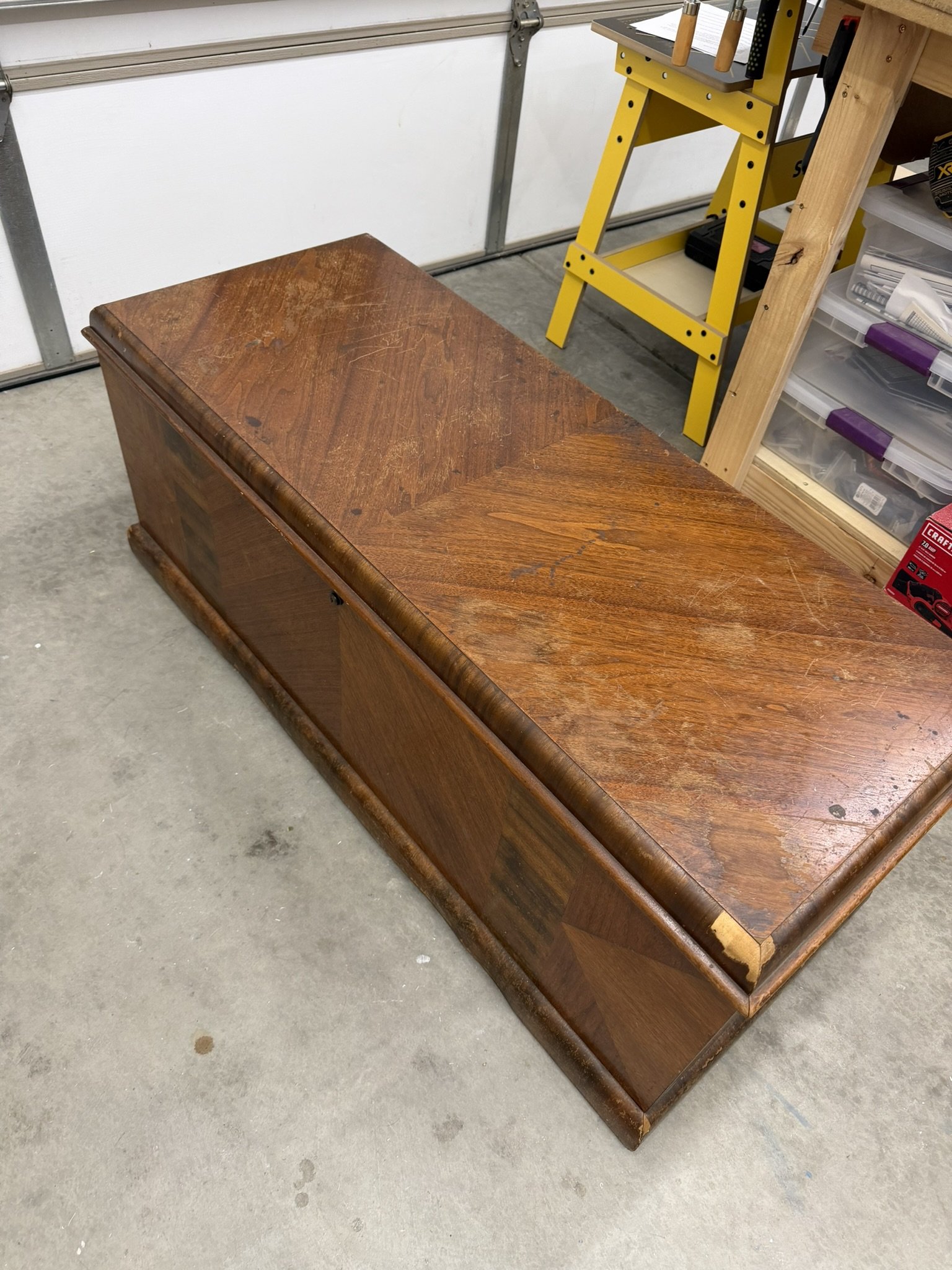
The 1951 Lane Cedar Chest: Before Restoration - This chest has seen decades of use, and it shows. The once-stunning top now bears deep scratches, wear patterns, and peeling veneer. Beneath the damage lies solid craftsmanship from Lane - a company once known as “The Hope Chest Company” and beloved for its cedar-lined chests, often given as gifts marking important milestones like graduations and weddings.
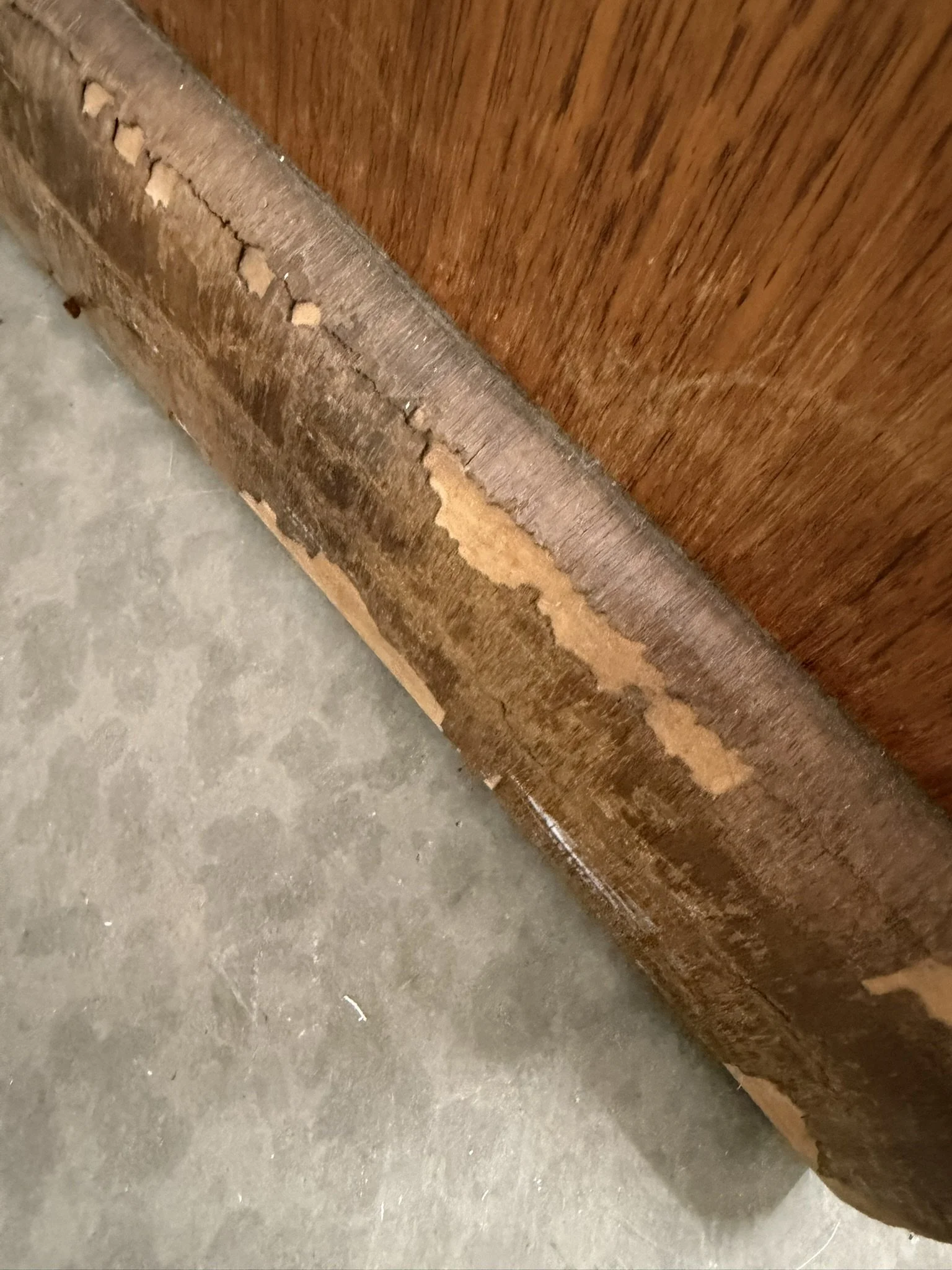
Damage Close-Up: Front Base - The veneer along the bottom edge is peeling badly, revealing the substrate underneath. Veneering was a common and economical way to showcase stunning grain patterns. Lane used this method often to achieve that iconic, high-end look at a more affordable price point. Unfortunately, this also meant these areas were vulnerable over time.
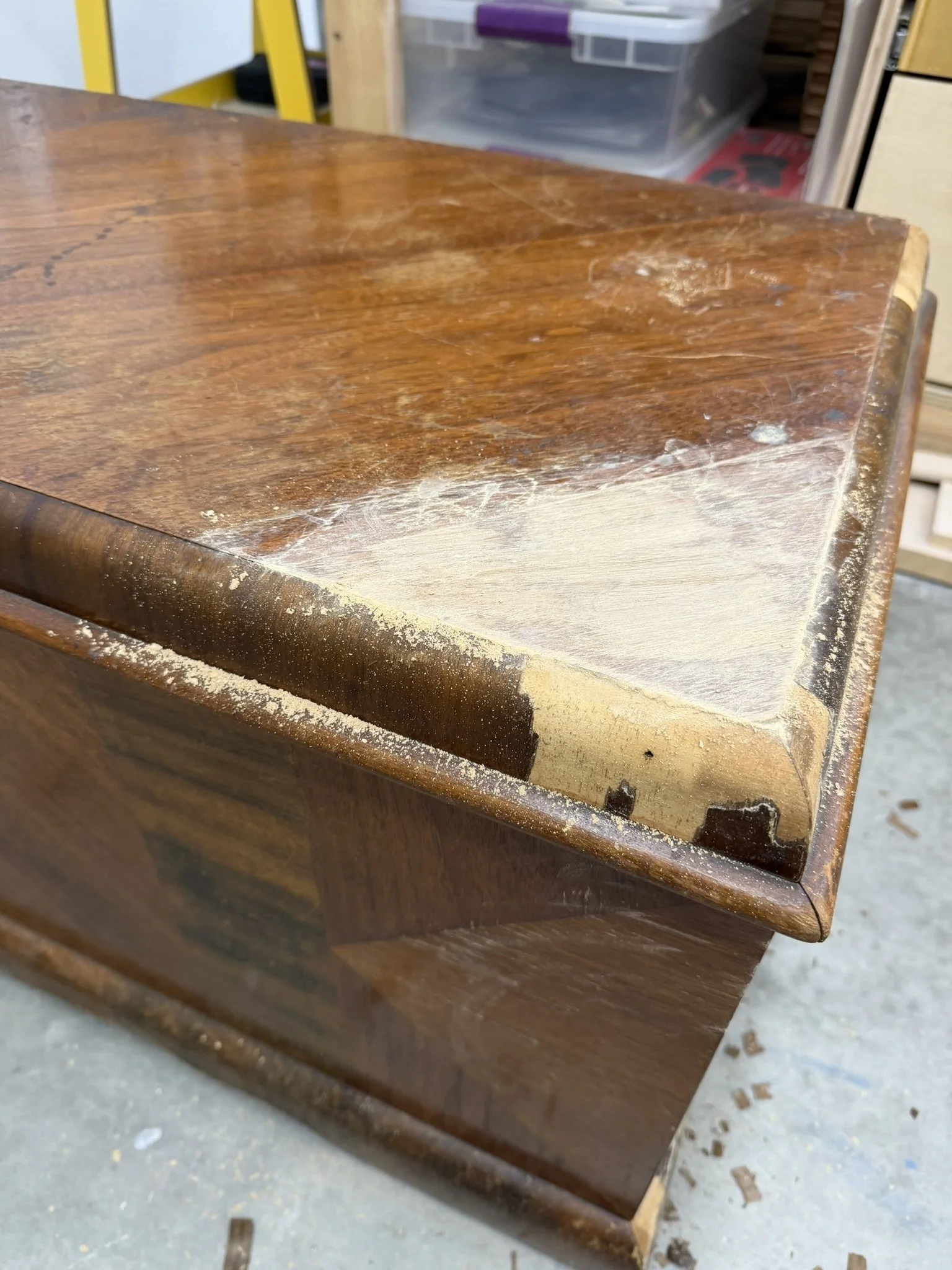
Veneer Check: Where It Held and Where It Didn’t - I started by checking how well the veneer was still bonded. In most areas, Lane’s original glue was impressively strong, even after 70+ years. But as expected, some spots like corners and curves (those pesky radiuses!) had started to peel away with little effort. Classic signs of age, wear, and just plain gravity doing its thing.
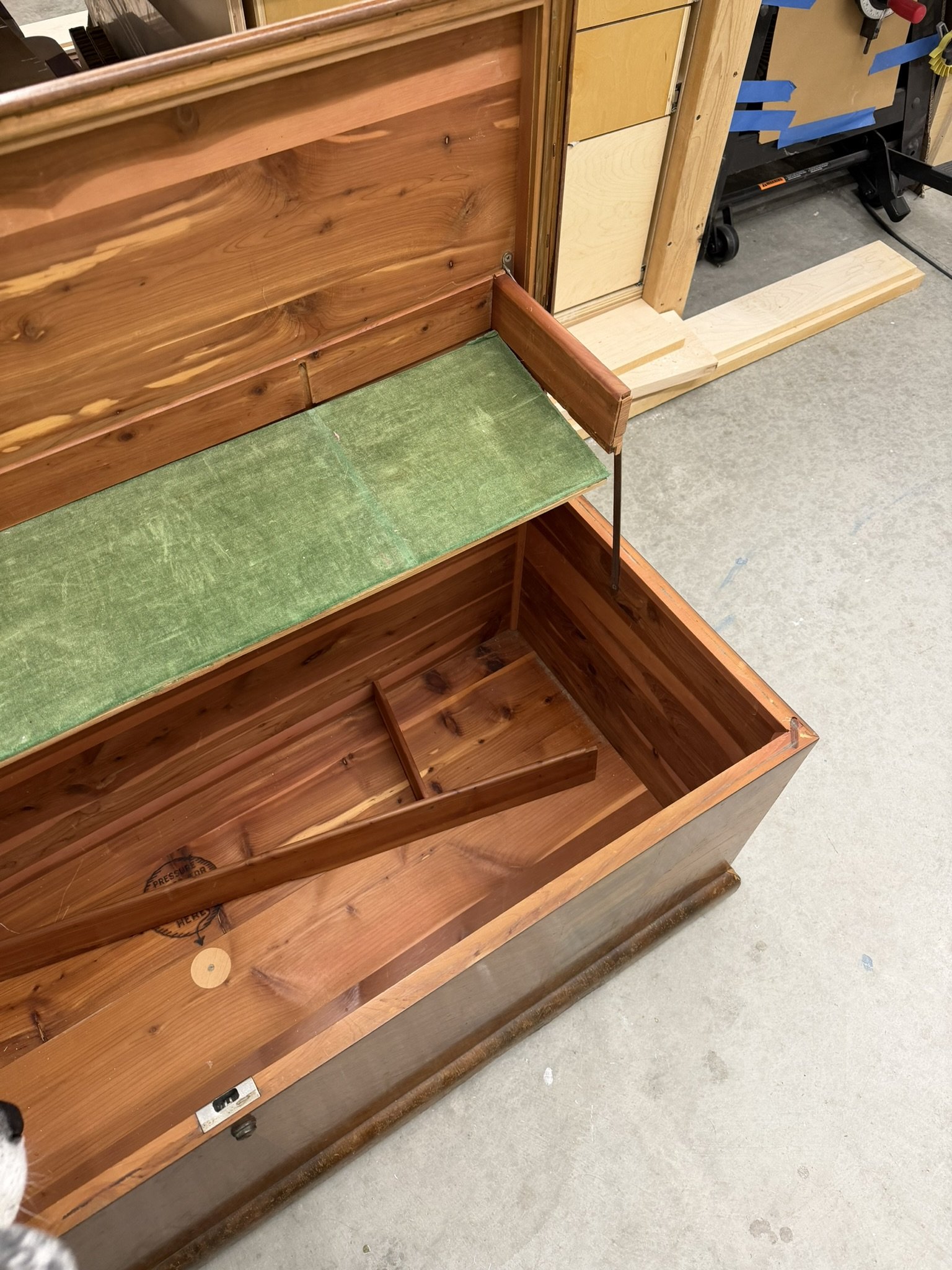
Interior View: Lane’s Classic Cedar Interior - Original red cedar interior still going strong after more than 70 years. Lane was known for this signature feature, both aromatic and naturally pest-resistant. The top tray, covered in vintage green felt, needs to be rebuilt.
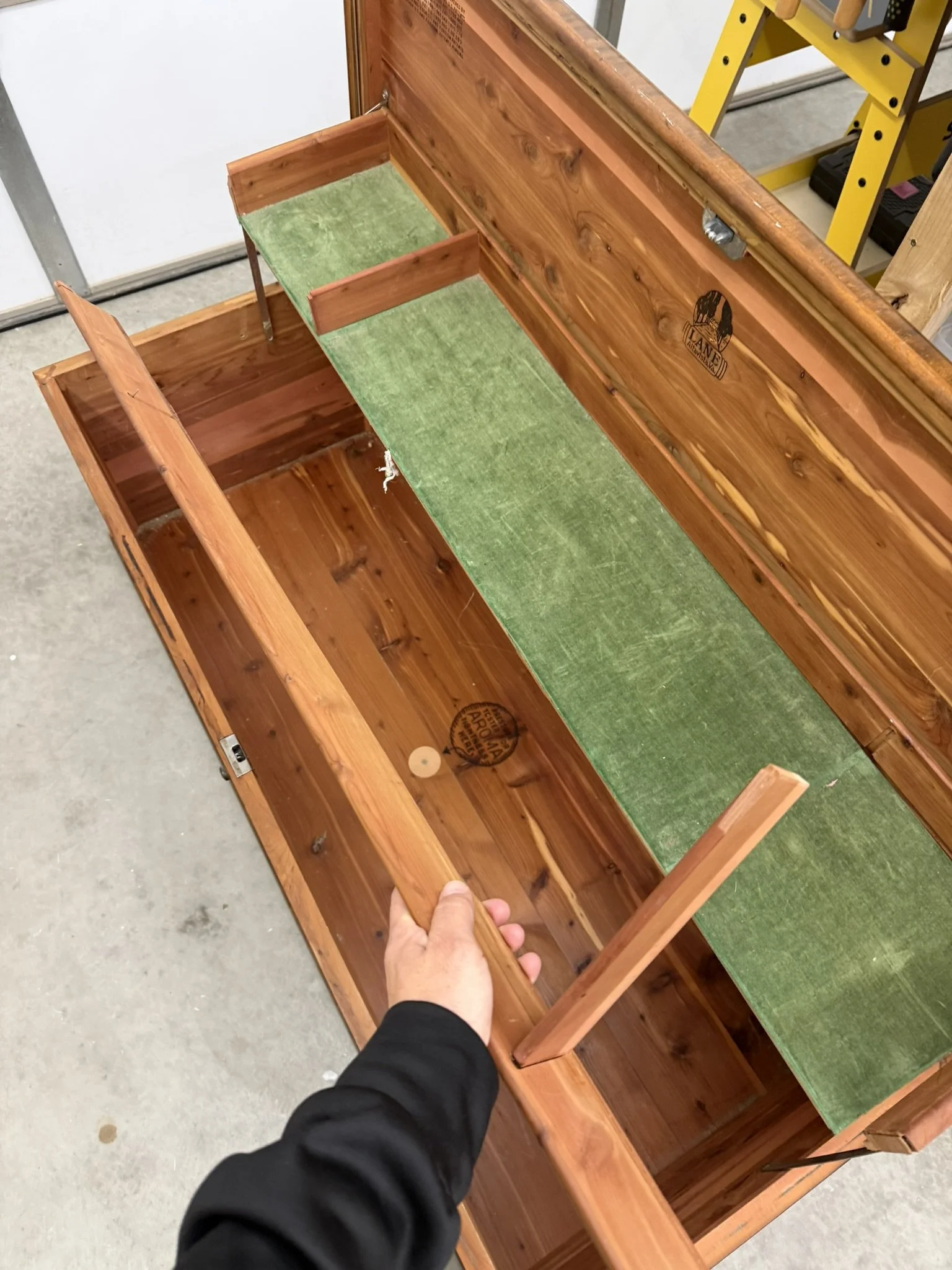
The tray was designed to organize smaller items, keeping them separate from the bulk storage below. That unmistakable cedar aroma is faint but still present a testament to Lane’s craftsmanship and the natural preservative qualities of cedar wood. A little light sanding to refresh is all it needs.
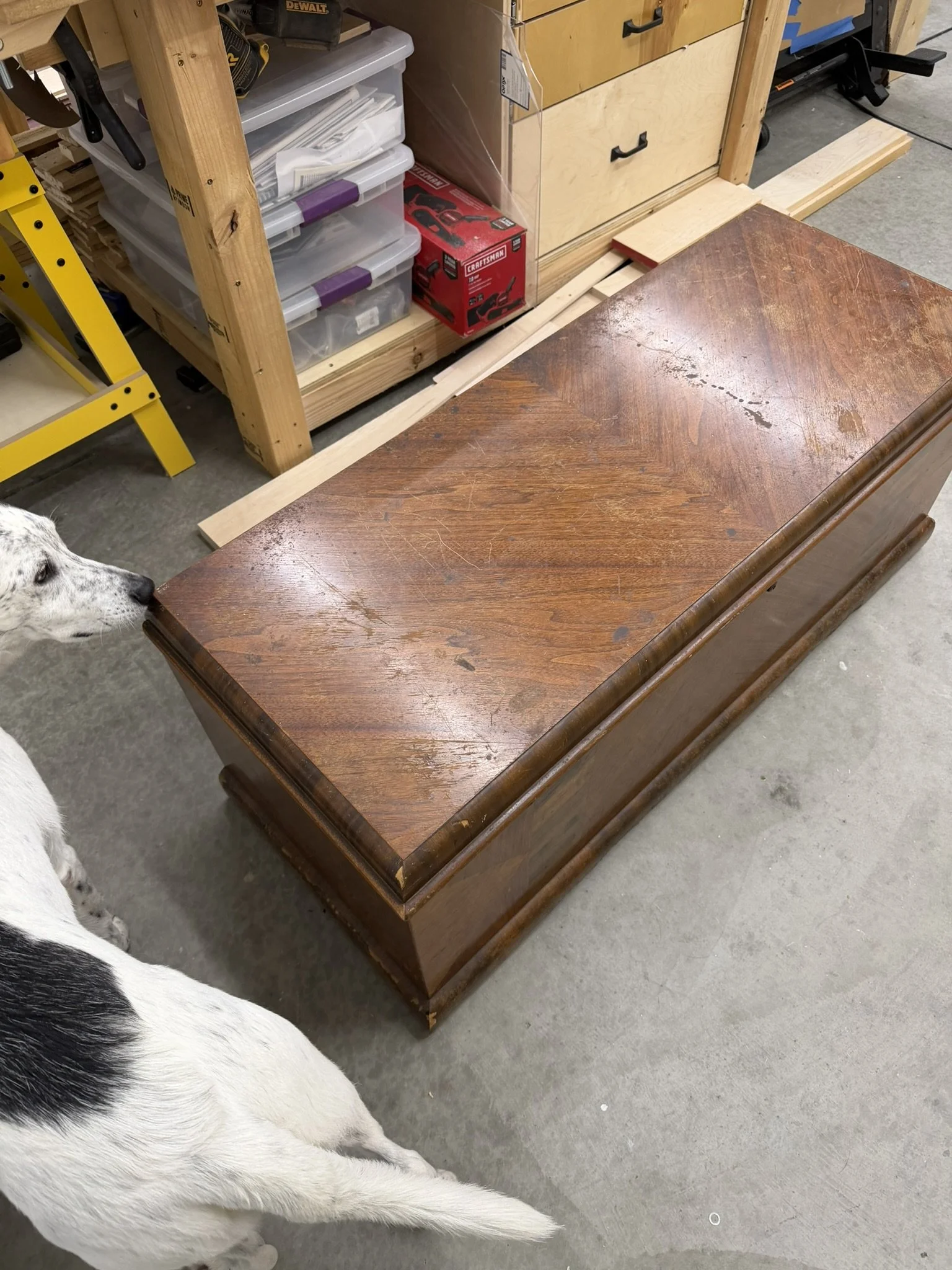
First Things First: Inspection by the Shop Boss! - Before any restoration begins, the resident supervisor gives this 1951 Lane Cedar Chest a full sniff-down. With years of wear, chipped veneer, and scratches galore, there's a lot to take in, but that signature Lane silhouette still holds promise.
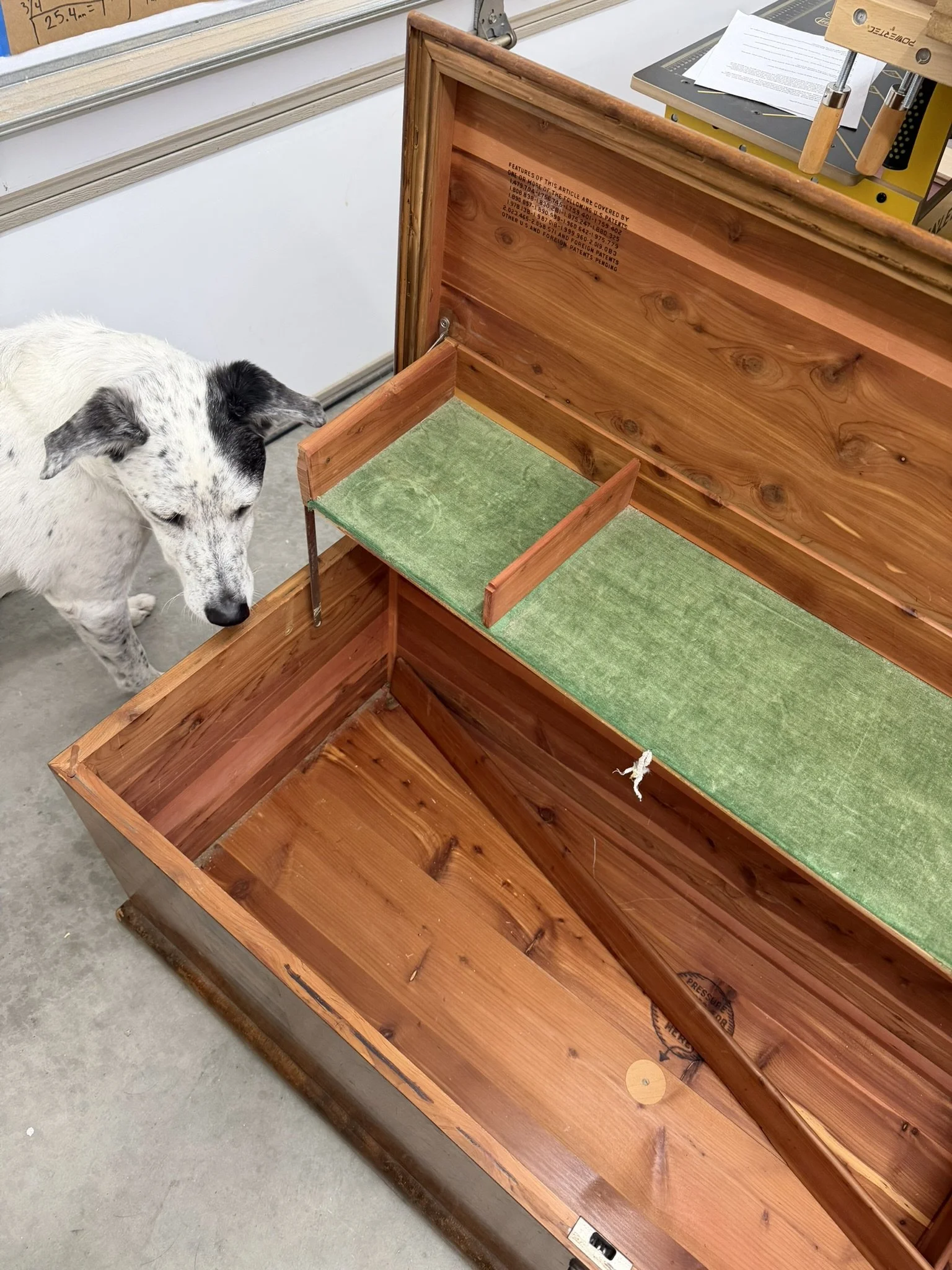
Thorough inspection but we finally got the go-ahead, so time to roll up our sleeves and get to work!
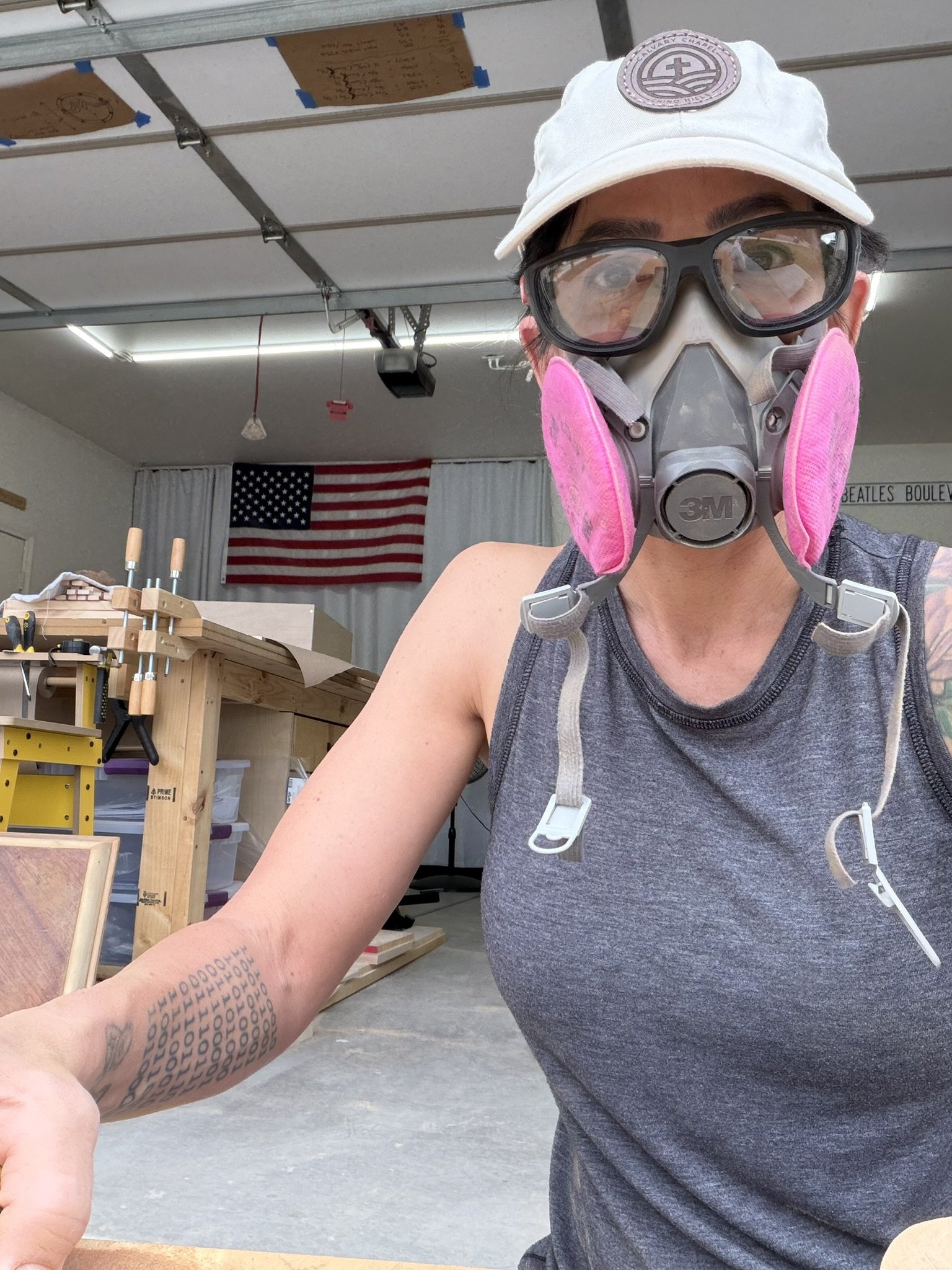
Sanding Marathon: The Veneer Battle - After failing to lift the veneer with heat, I surrendered to the orbital sander and a LOT of hand sanding, settling in for the long haul. 13 hours to be exact. I worked out in the driveway, collecting smiles and chuckles from neighbors passing by. A quick selfie confirmed I looked ridiculous, but at least my lungs, eyes, and freshly washed hair were safe!
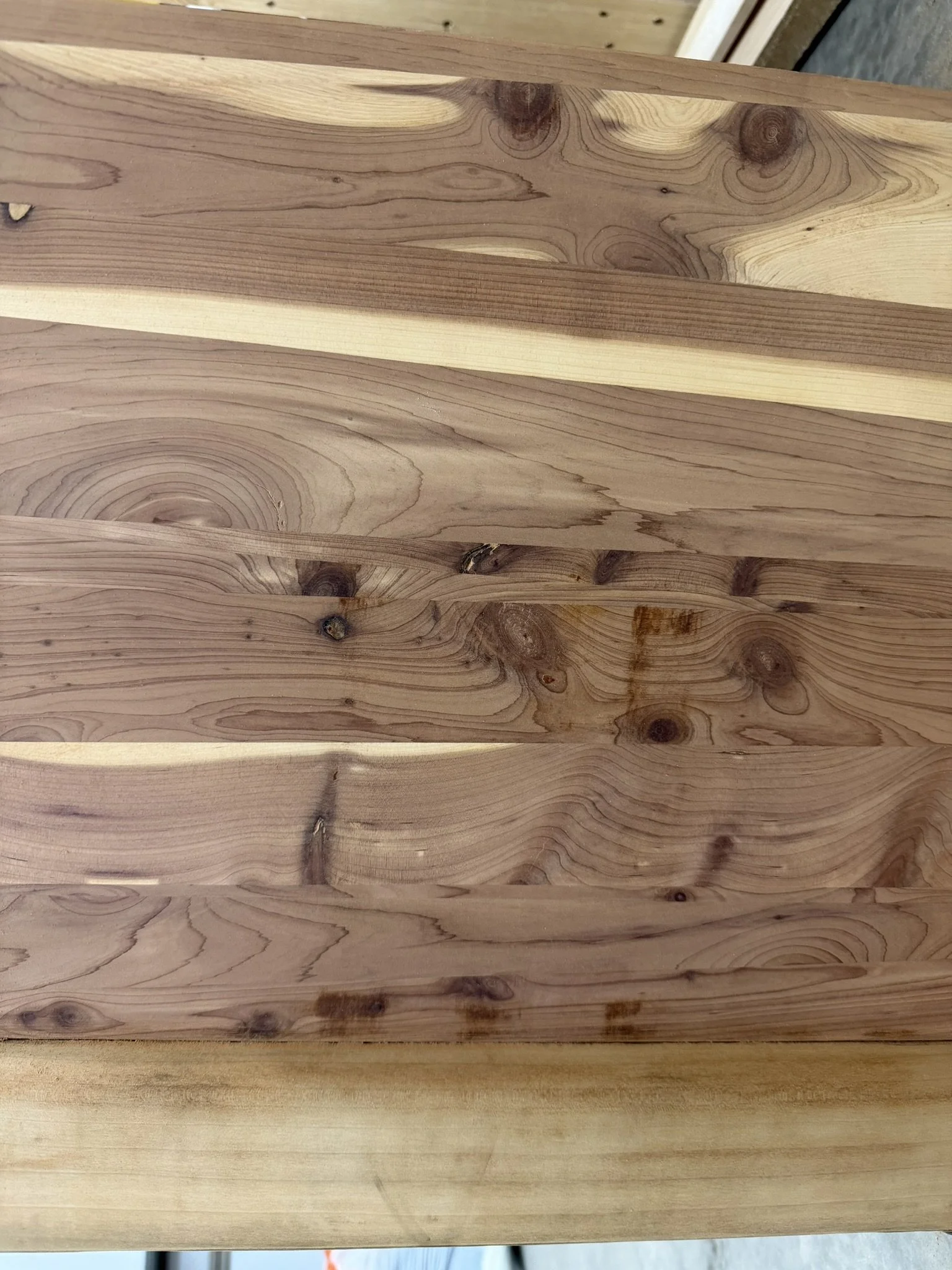
Close-up of Side Panel - Just look at that gorgeous cedar grain starting to shine through! This close-up shows where the old veneer has been fully removed. Underneath, the solid cedar panels are finally able to breathe again, and they’re stunning.
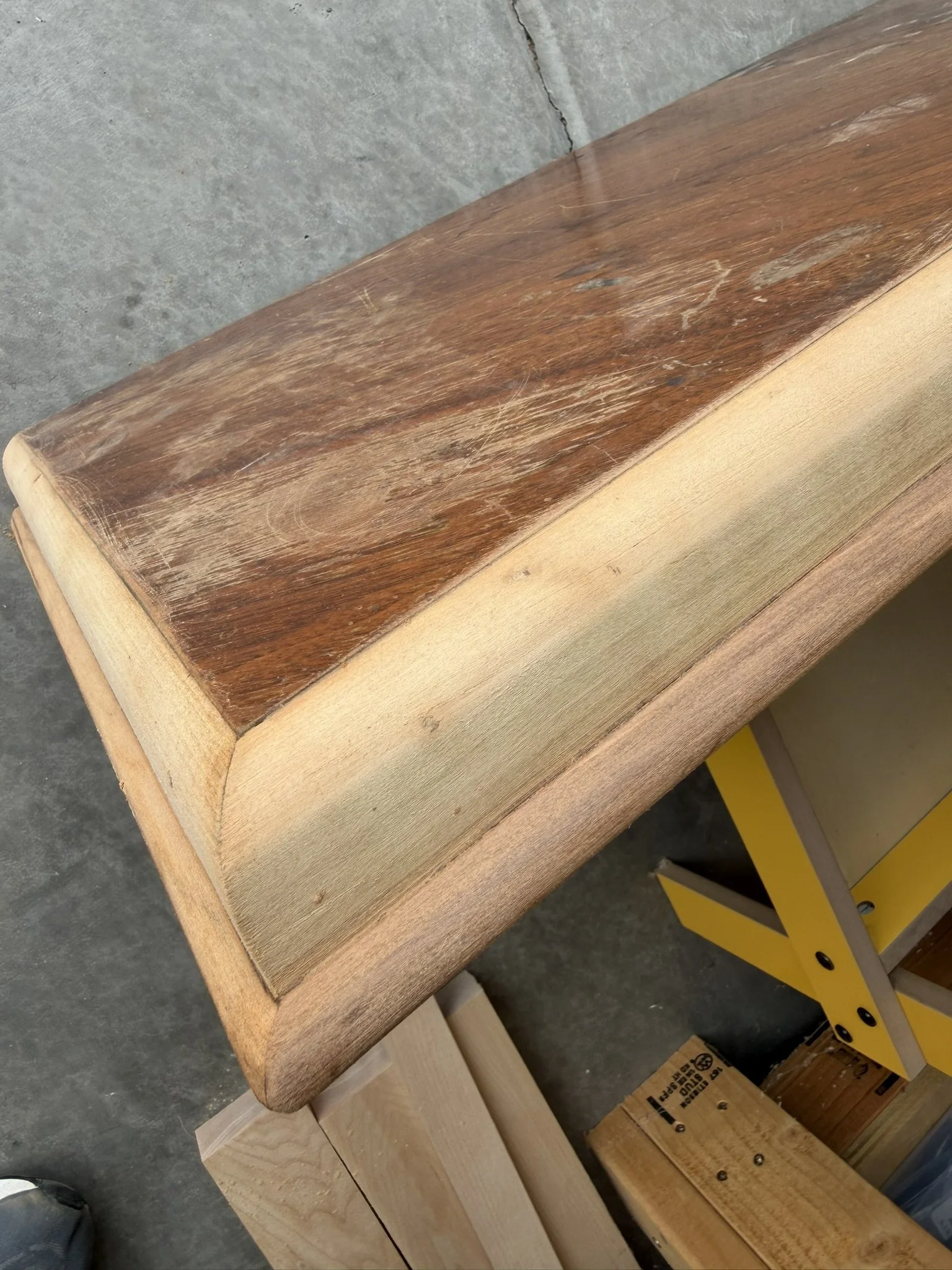
Trim Detail - The trim work took a lot of patience and even more elbow grease. Heat wasn’t effective, so it came down to careful hand-sanding around every curve and edge. Who needs a gym when you’ve got three days of arm workouts like this?
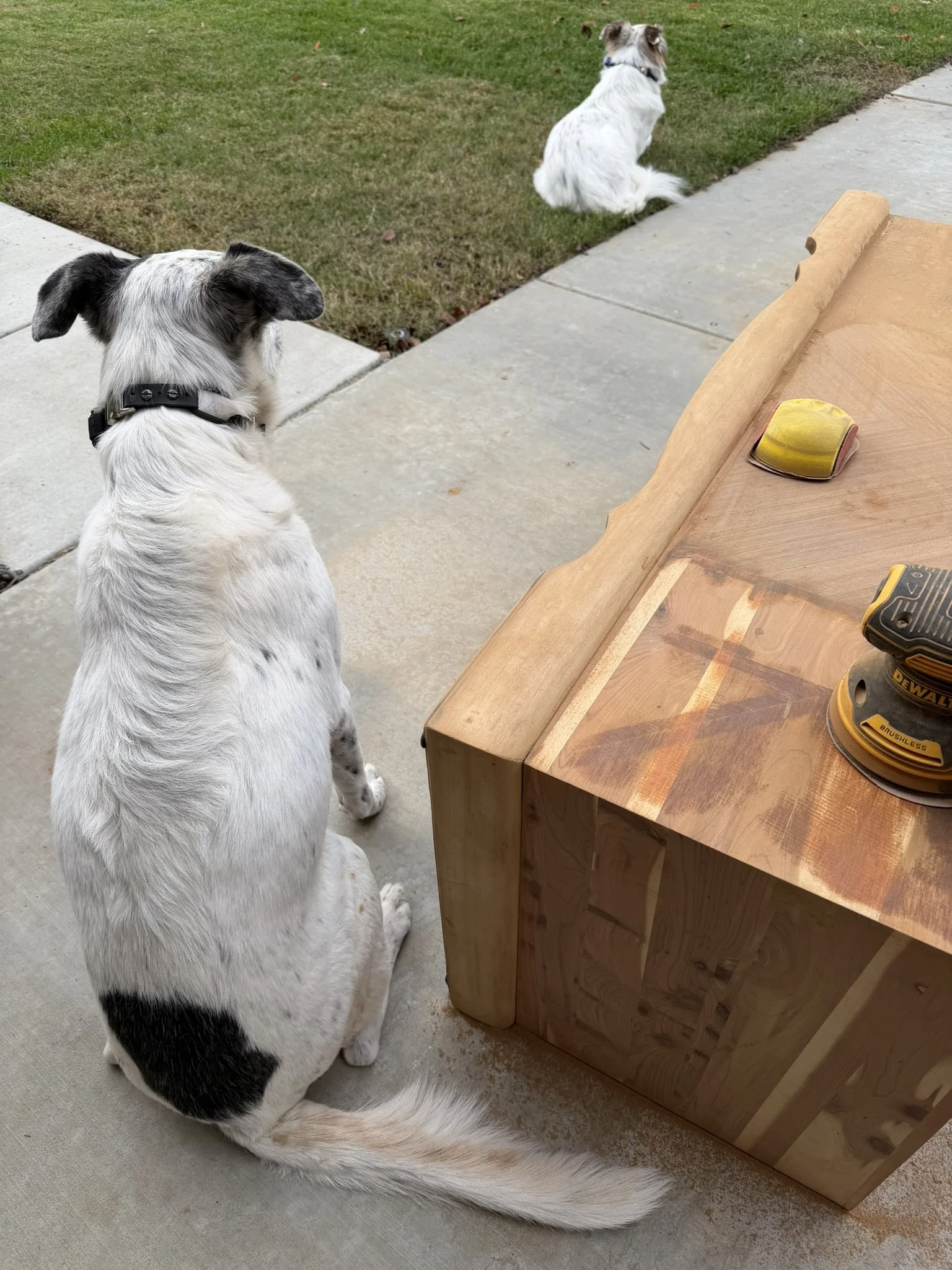
Smokey likes to be involved...closely involved. Bandit, on the other hand, kept his distance…at first. Of course, once the sanding dust started sticking to everything, both dogs needed a full scrub. Totally worth it for the company (and the cuteness).
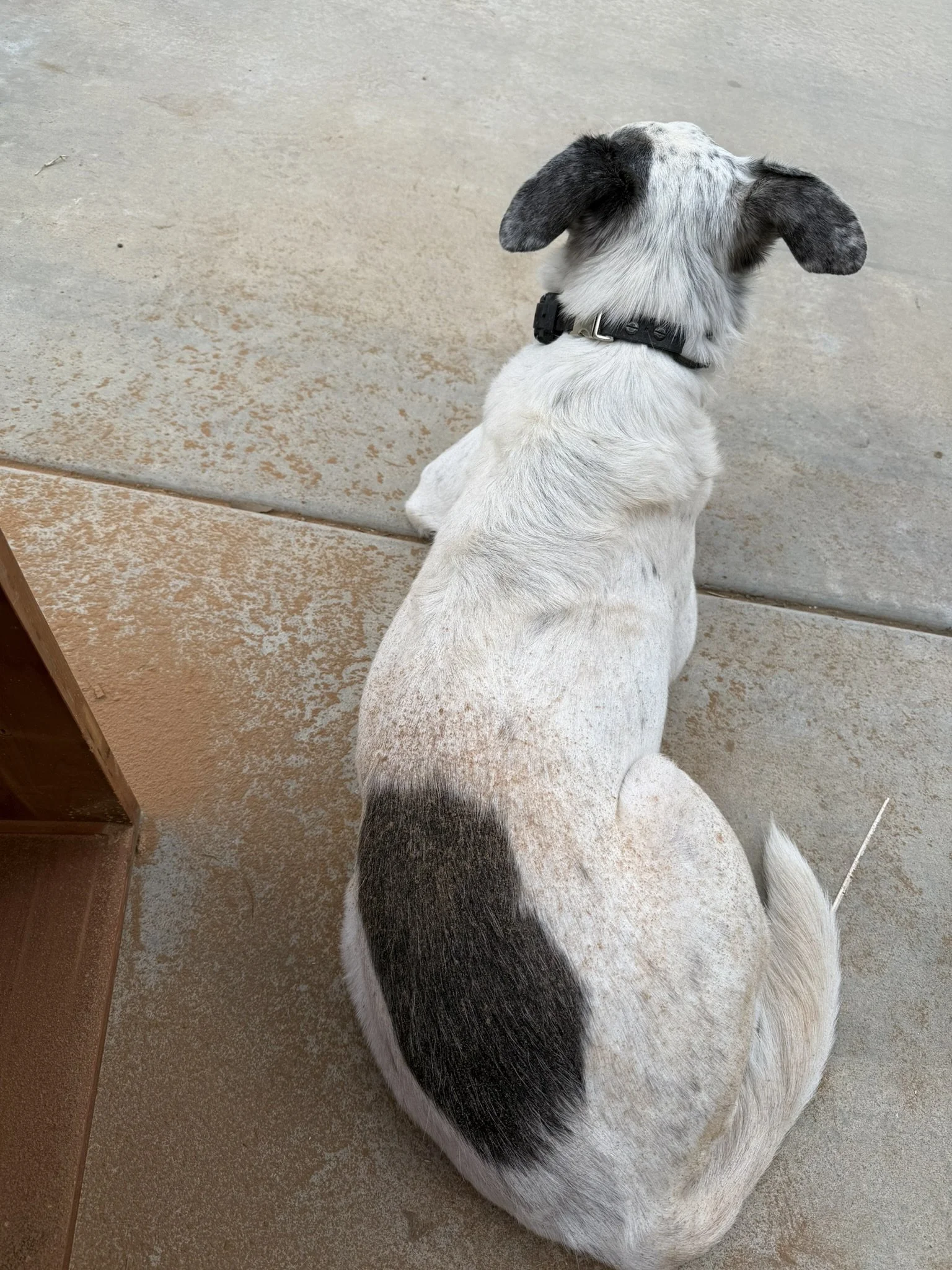
So Much Dust - The shop supervisors had a scrub down after work before they were allowed back in the house.
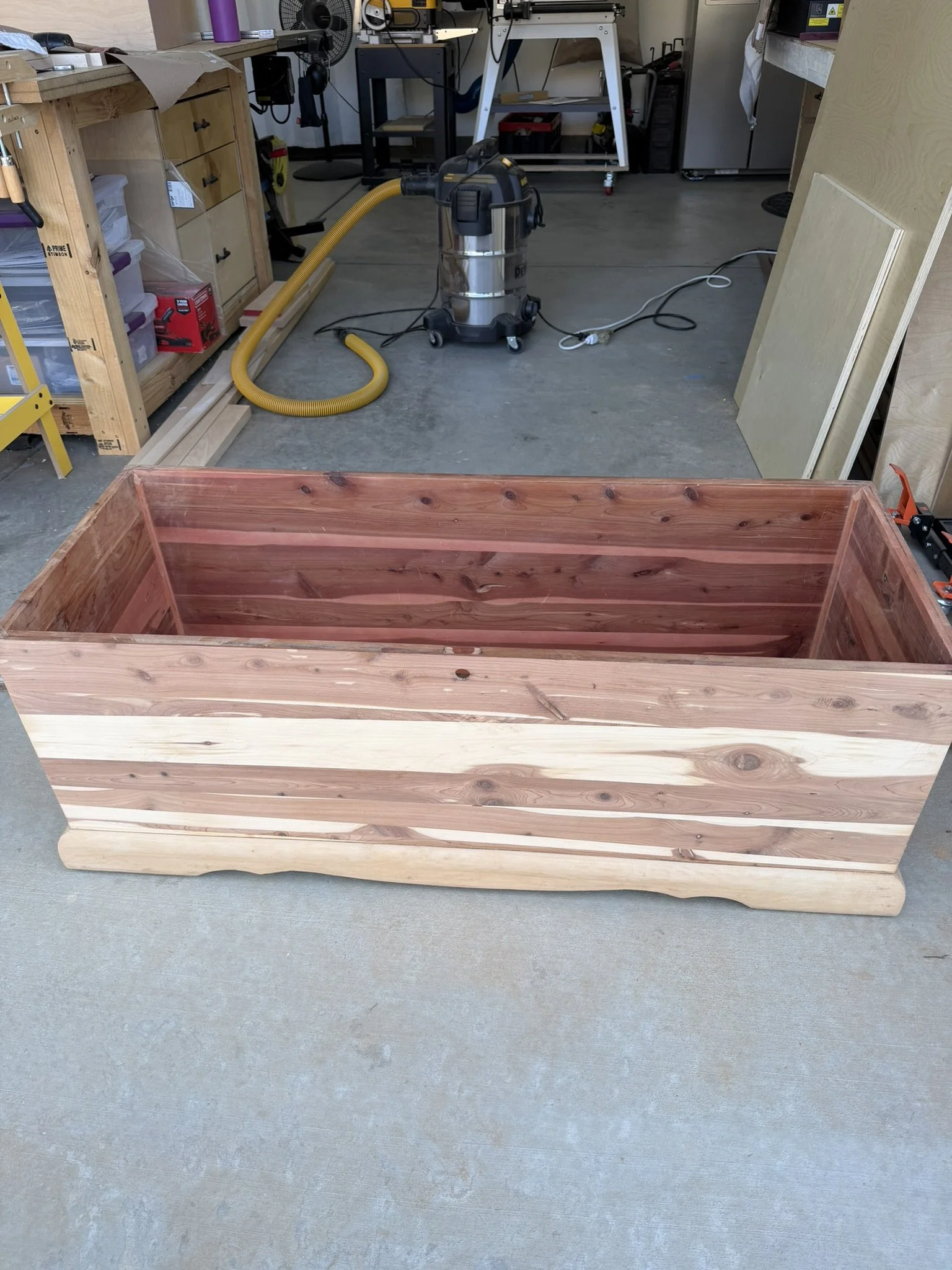
Fully stripped - All cleaned up and back to basics. The original veneer is stripped away to highlight the natural contrast in the cedar grain, with a gentle curve in the base that we carefully preserved.
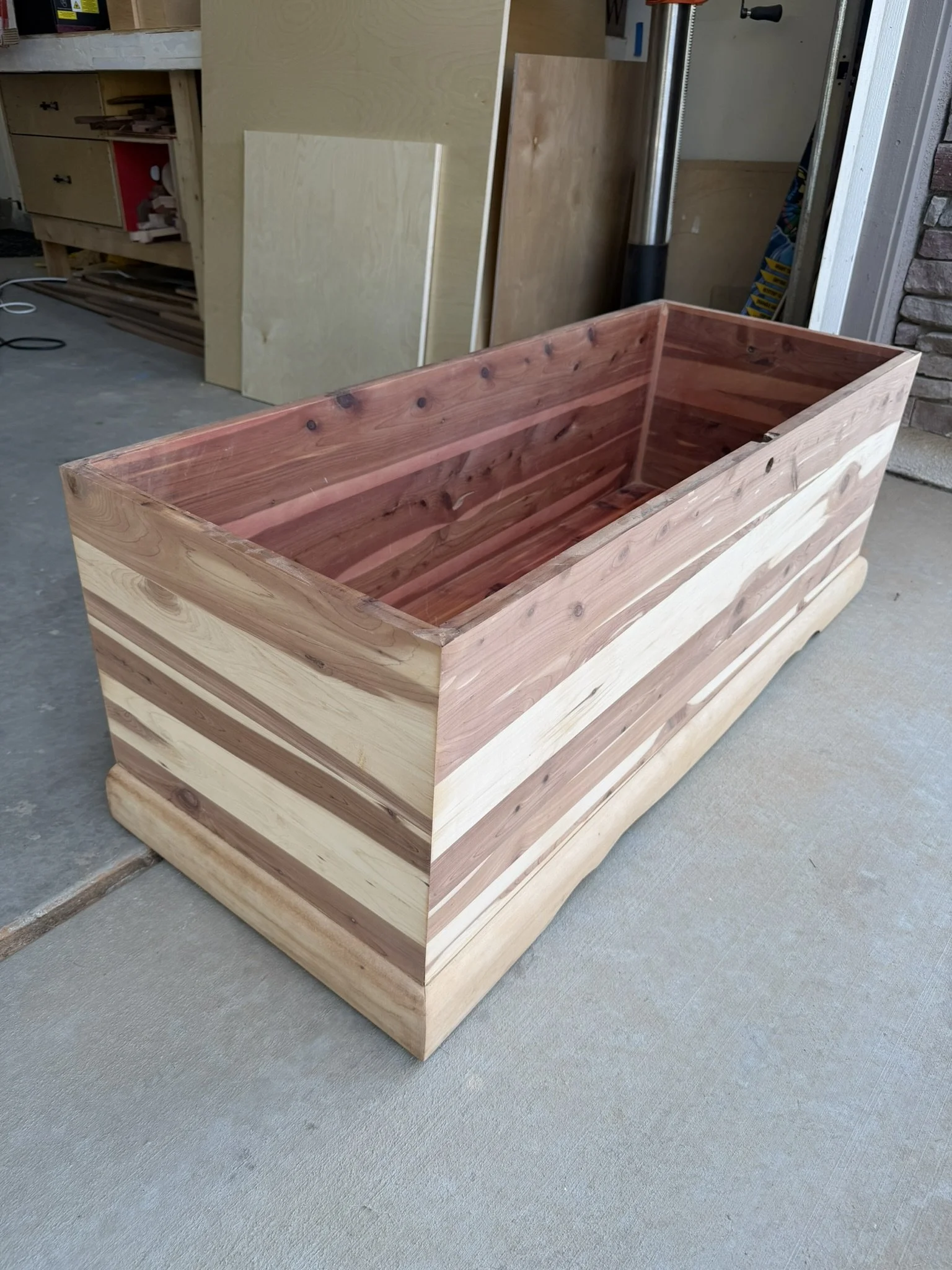
Stripped - The veneer is gone, revealing the beauty beneath. This Lane cedar chest now shows off its solid wood construction.
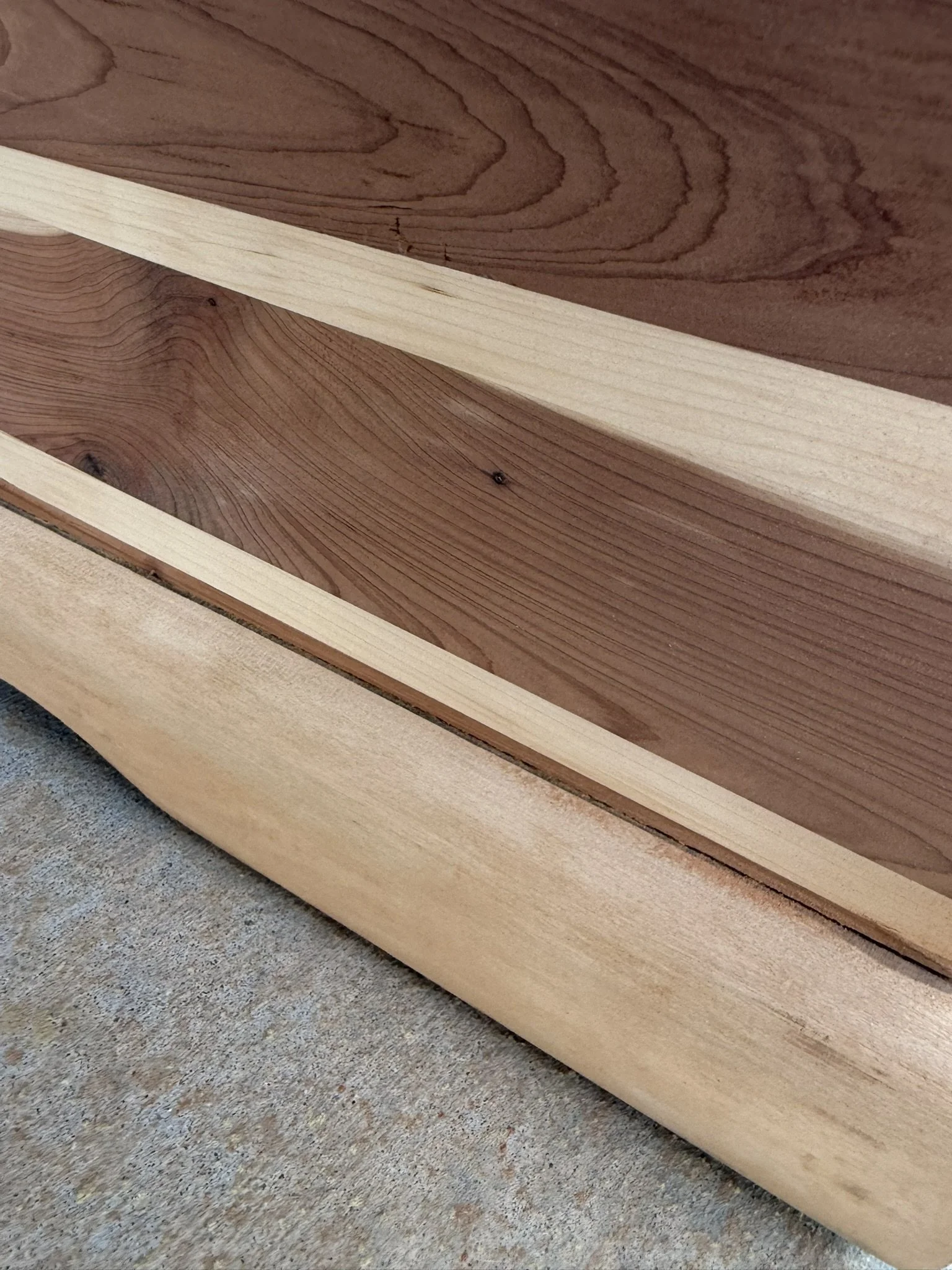
Close-up - Here's a close look at the decorative base molding. Extra care was taken when sanding to maintain the crisp curves and avoid flattening the profile.
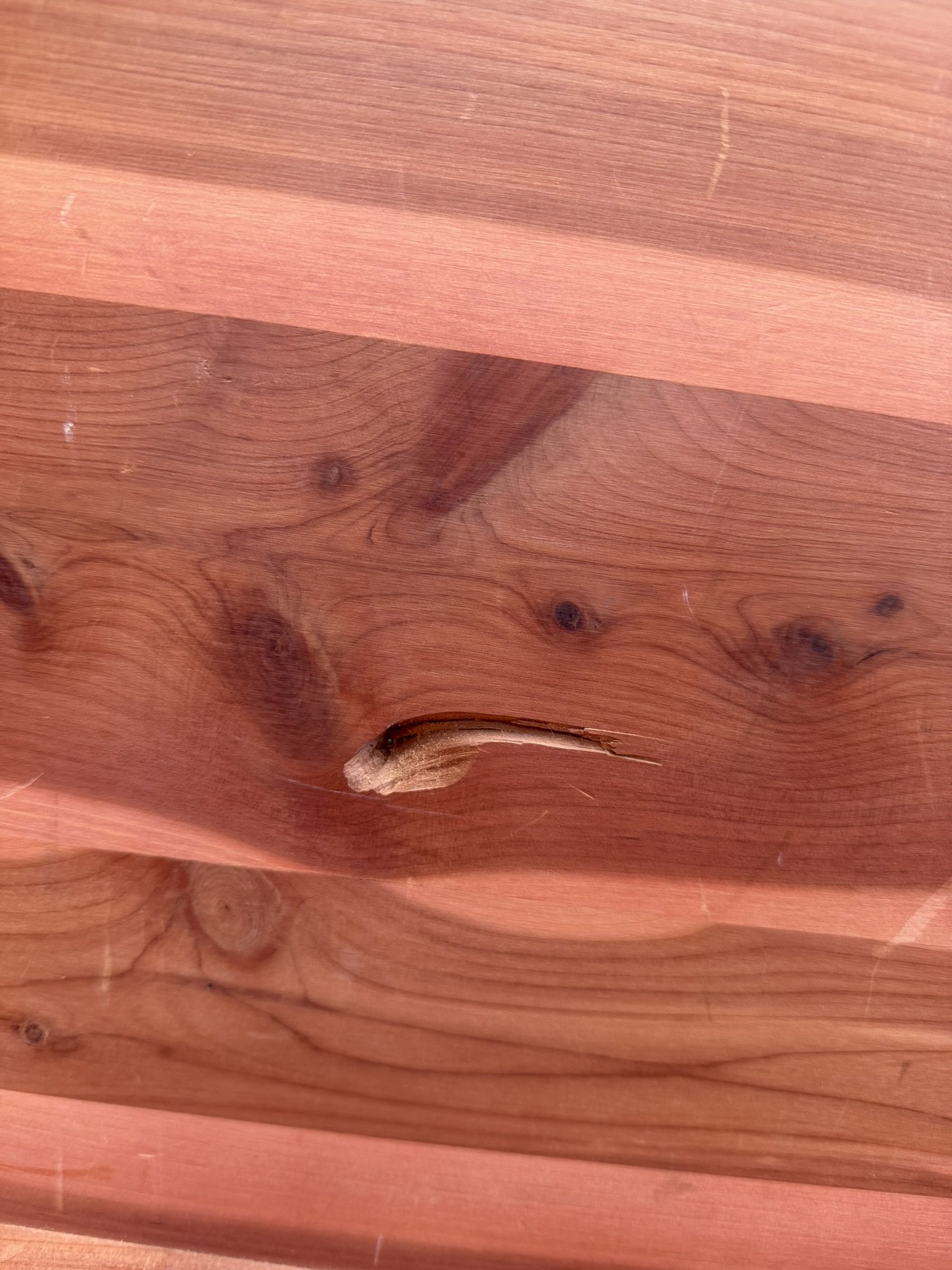
Natural Knot and Intentional Relief Cut - That crack around the knot isn't damage, it's actually an intentional relief cut made by Lane to reduce pressure around denser knots. It prevents future cracking and adds a bit of rustic charm to the cedar’s natural character.
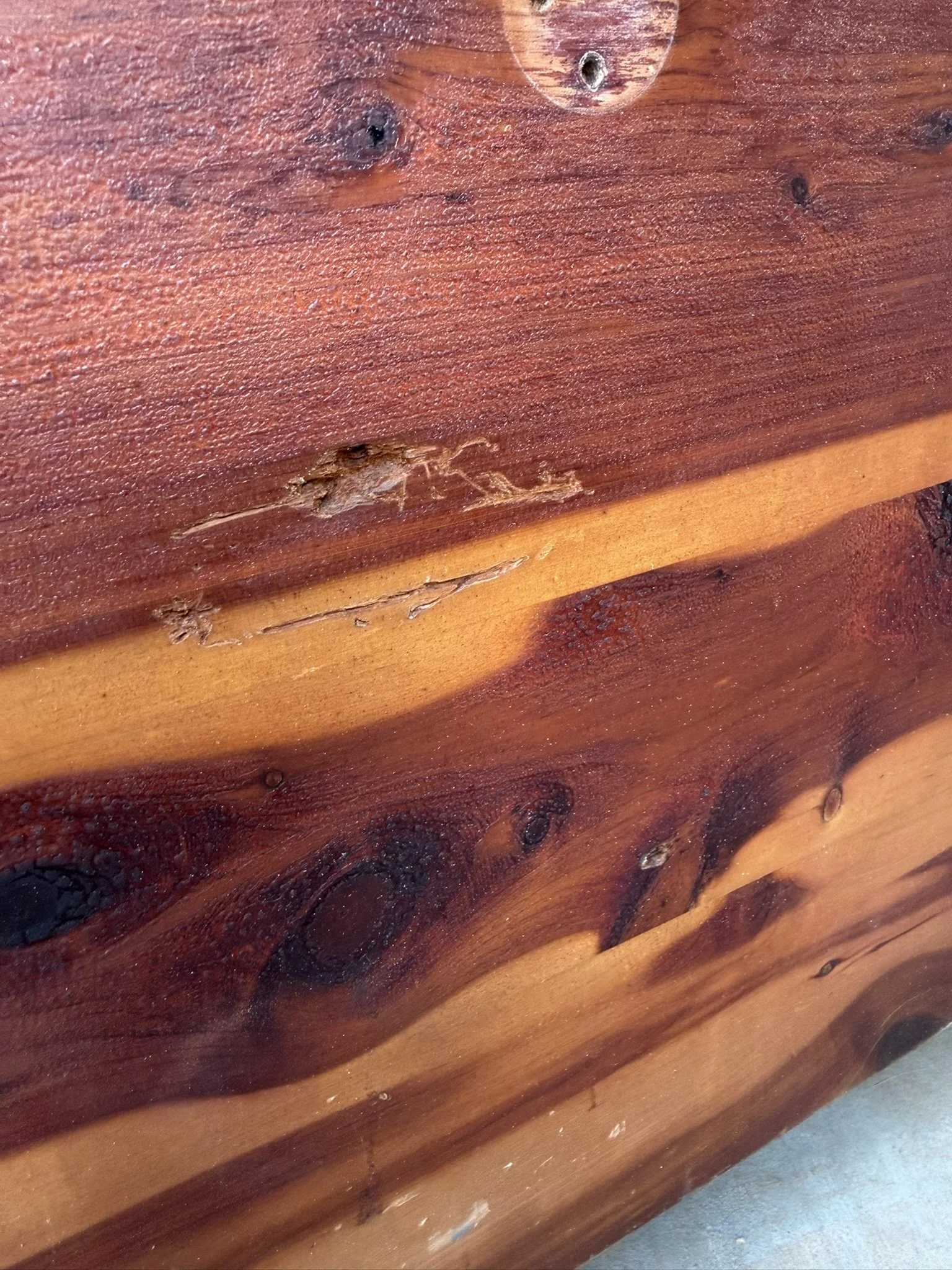
Factory Relief Gouge with Nail Pattern - What appears to be damage is actually part of Lane’s original construction. These gouge-like cuts were intentionally made as reliefs, often aligned in a row and reinforced with nails. This technique helped the chest flex slightly with seasonal changes while staying structurally sound, another example of thoughtful, time-tested craftsmanship.
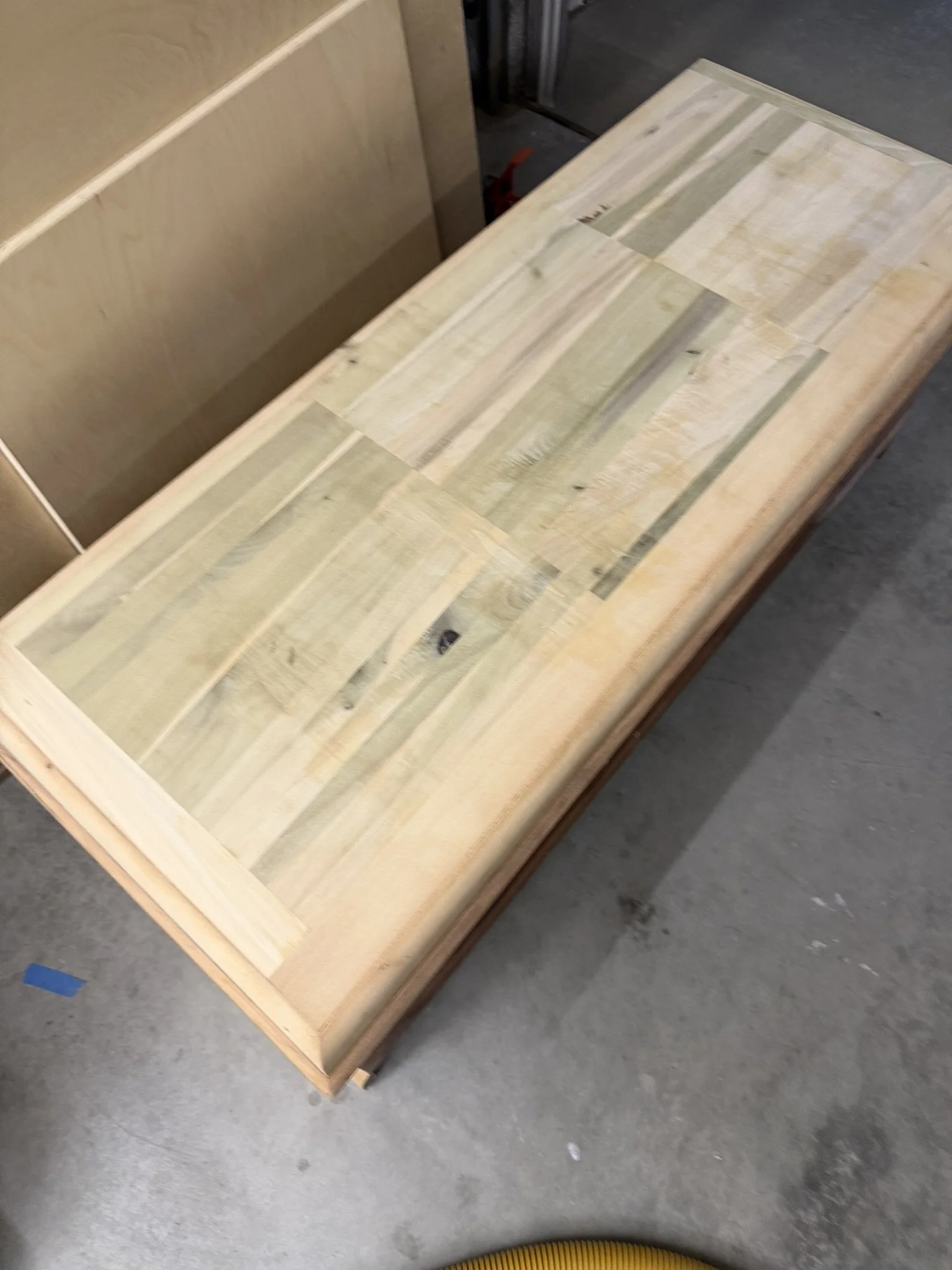
Top Panel Revealed: Solid Poplar - With all veneer carefully removed, the lid reveals its true character: solid poplar, known for its subtle green and cream hues. The distinctive coloration and grain pattern make poplar easily identifiable. Care was taken to preserve the rounded edge profile, sanding smoothly along the curves without compromising the shape.
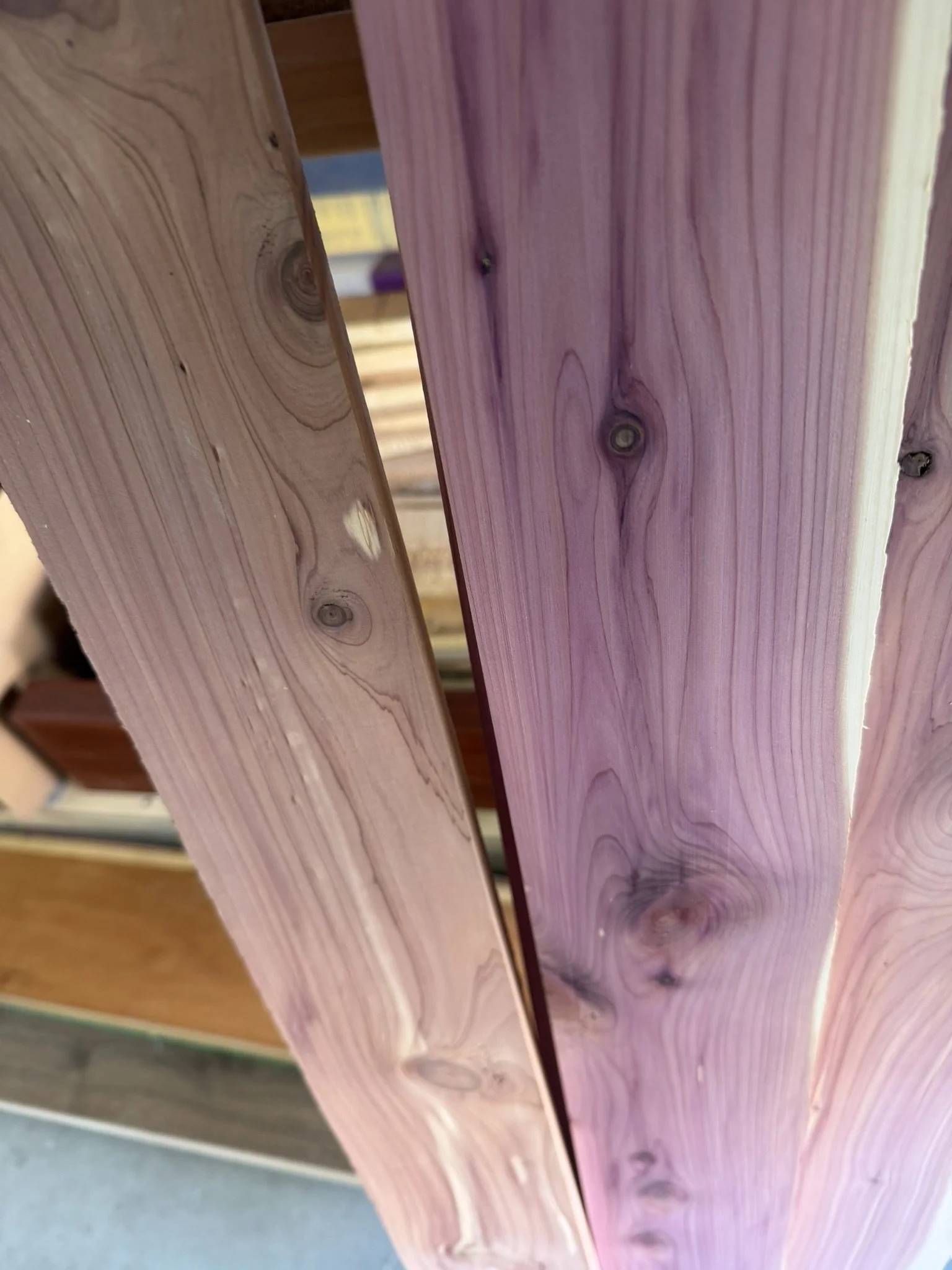
Cedar: Before and After Planing - Preparing to rebuild the interior shelf, we surfaced fresh cedar boards to reveal their vibrant natural color and grain. The planed board on the right showcases the rich purple and creamy contrast of aromatic cedar, while the unplaned board on the left shows its more muted, oxidized surface before refinement. Over time, exposure to oxygen naturally causes the vibrant purple hues to mellow into a warm brown tone.
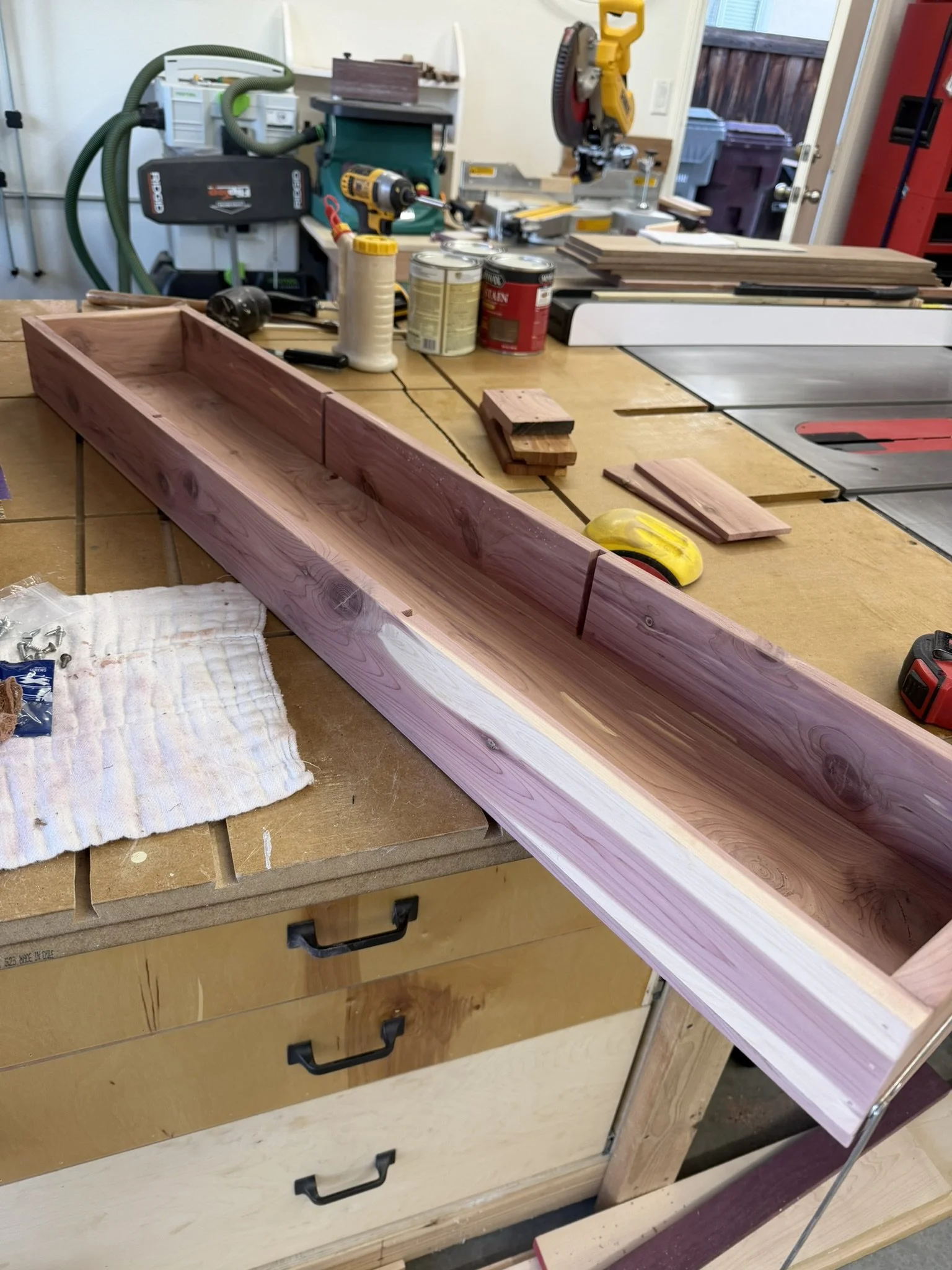
Rebuilding the Interior Shelf - Freshly planed cedar boards were cut, assembled, and test-fit to rebuild the interior shelf of the chest. The vibrant purple and cream tones highlight the aromatic cedar's natural beauty. Each divider was carefully positioned providing structural support and preserving the functionality of the original Lane design.
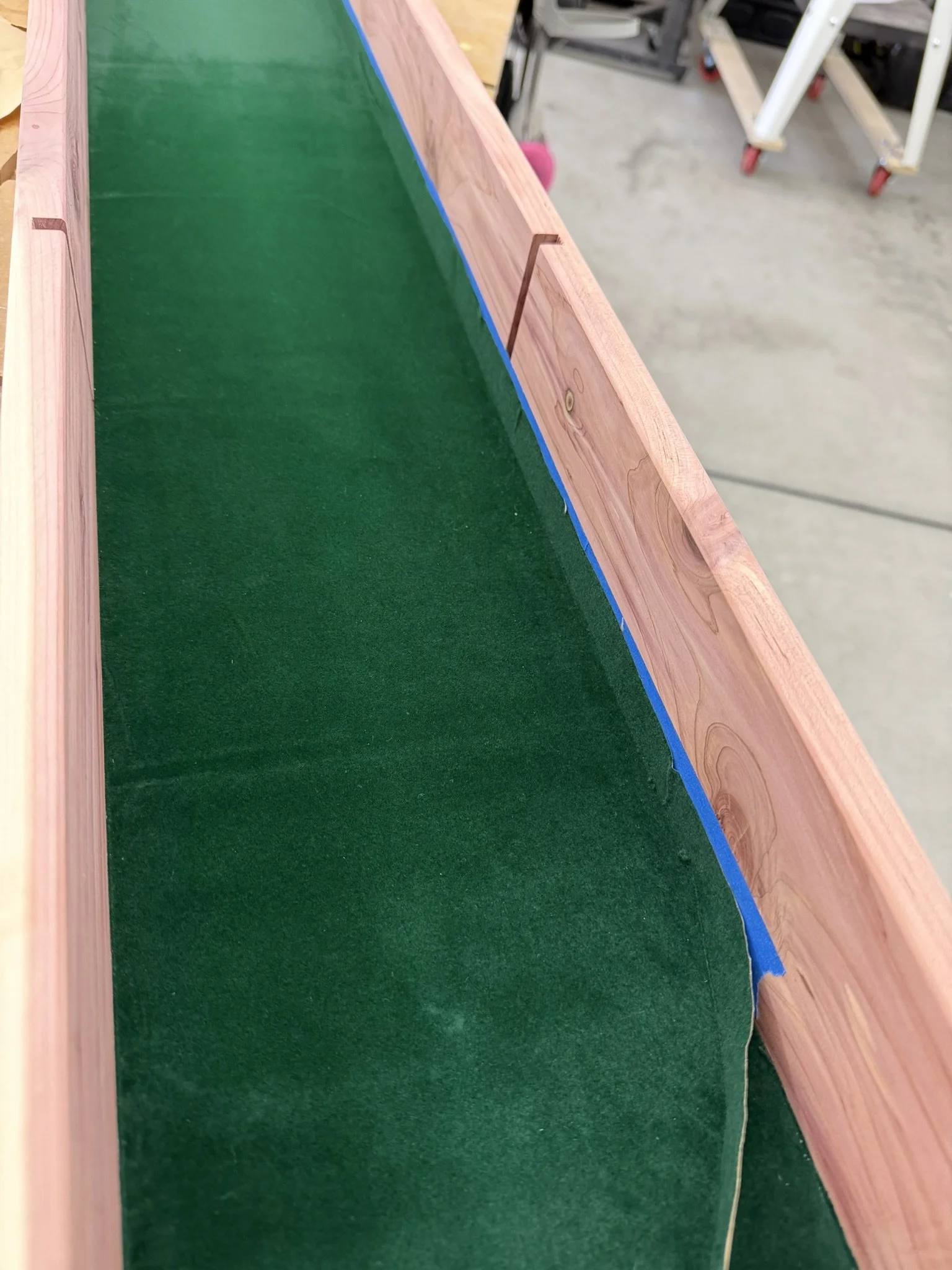
Velvet Install - Lining the newly built interior shelf with green velvet selected by the client. Tape protected cedar wall when velvet was razor cut along joint.
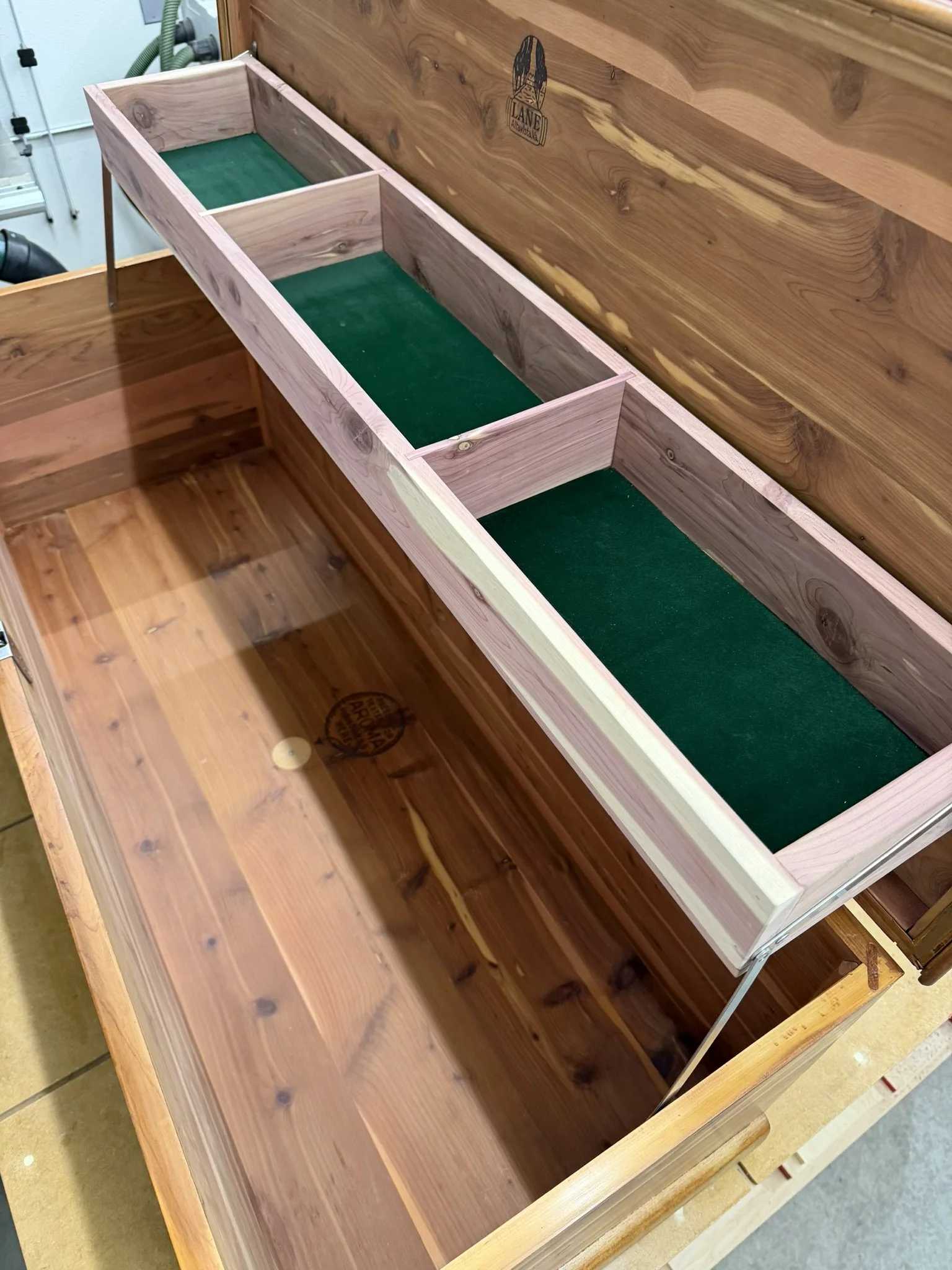
Shelf Installed - Another view of the installed shelf, showing the green velvet in each compartment and the aromatic cedar bottom stamped with Lane’s signature “AROMA” brand. A seamless blend of old and new.
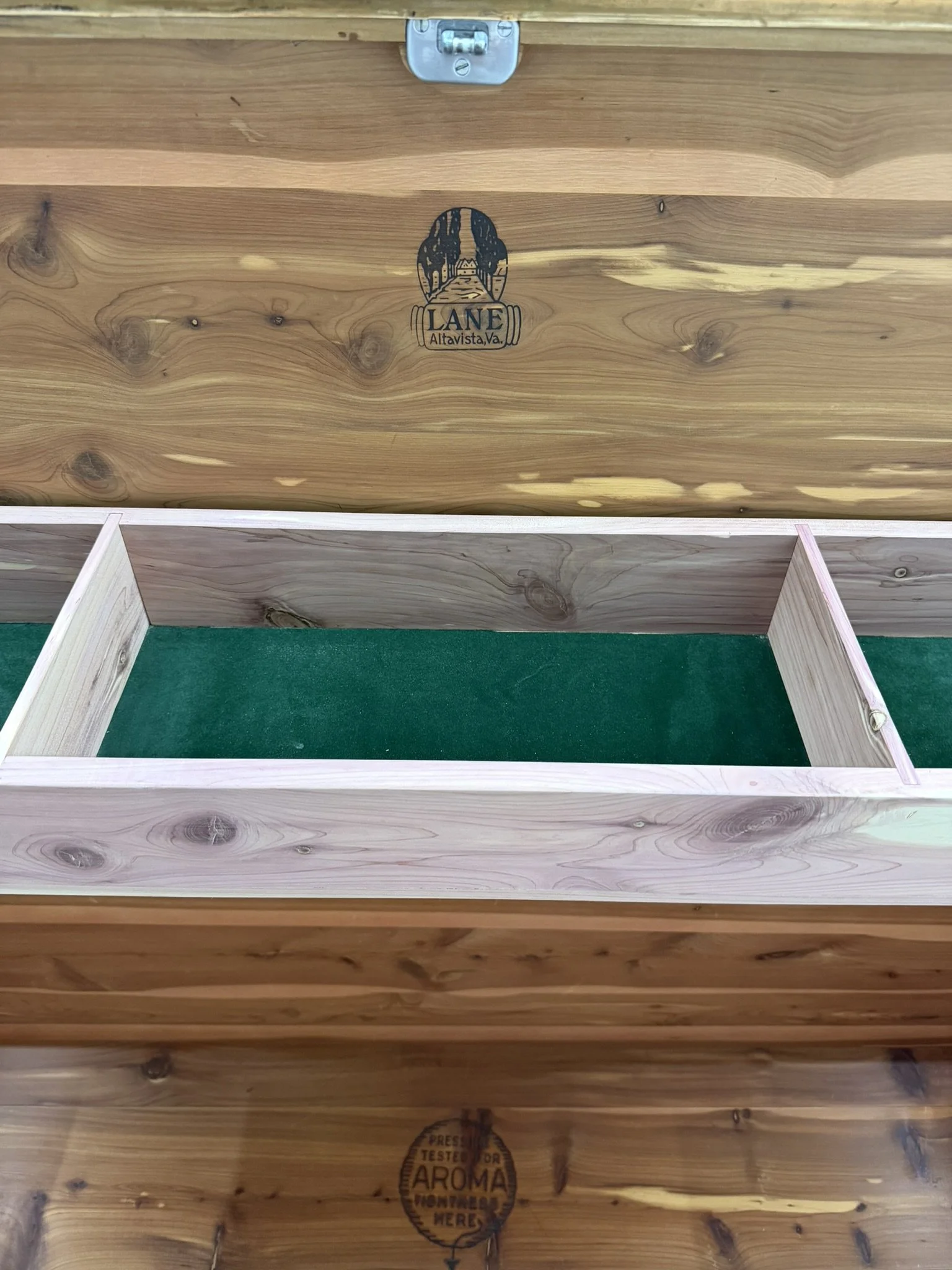
Final Fit and Finish - Shelf installed and divided into three compartments, blending fresh cedar with the original chest interior. Velvet adds a luxurious feel while protecting keepsakes from abrasion. The piece honors the Lane brand's original craftsmanship while offering modern durability and elegance.
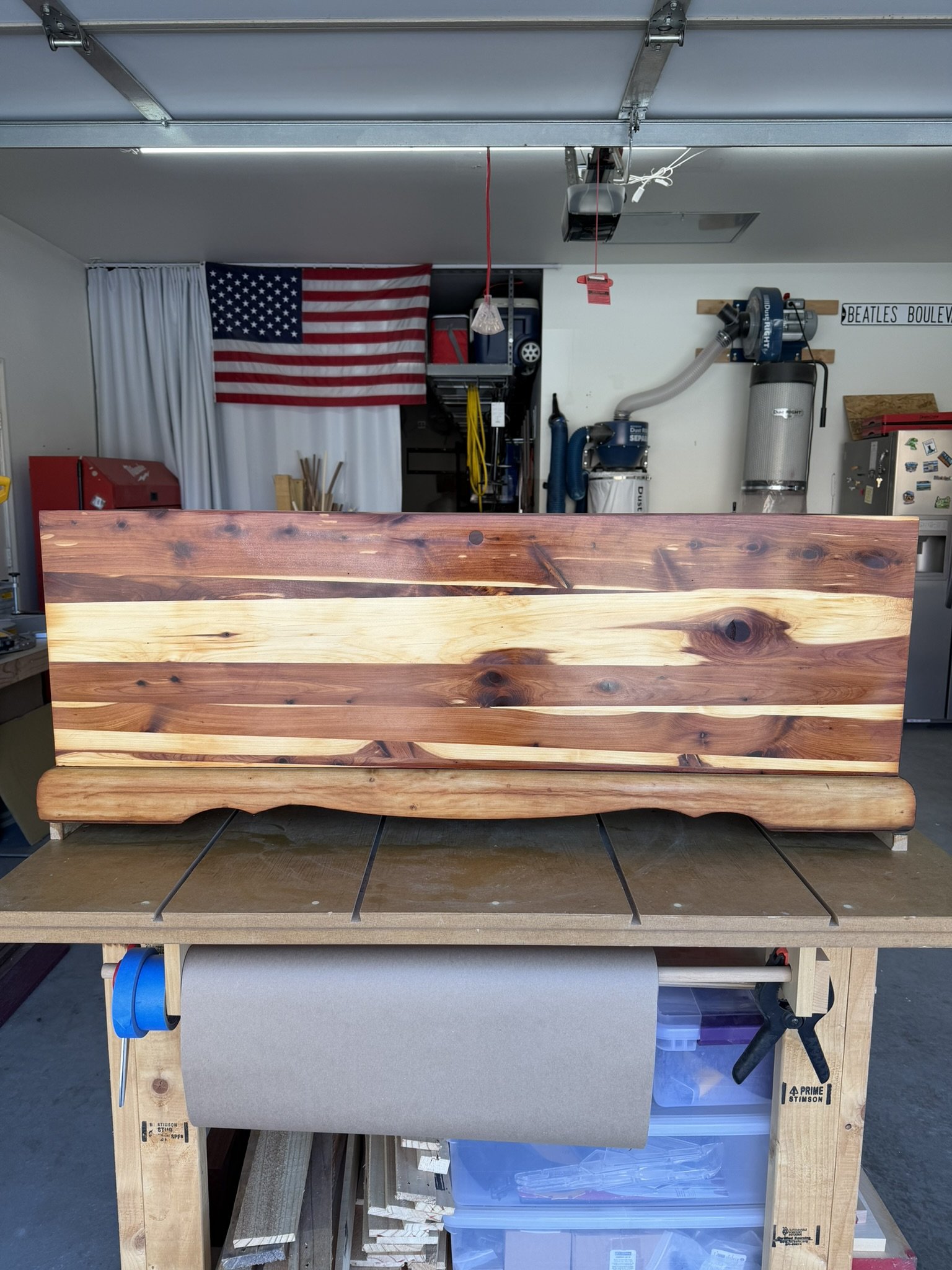
Front Conditioned - Pre-stain conditioner applied and left to soak for about 15 minutes before wiping. The aged cedar absorbed it quickly. Soft woods like this can blotch without proper conditioning, so this step is key to a smooth, even finish.
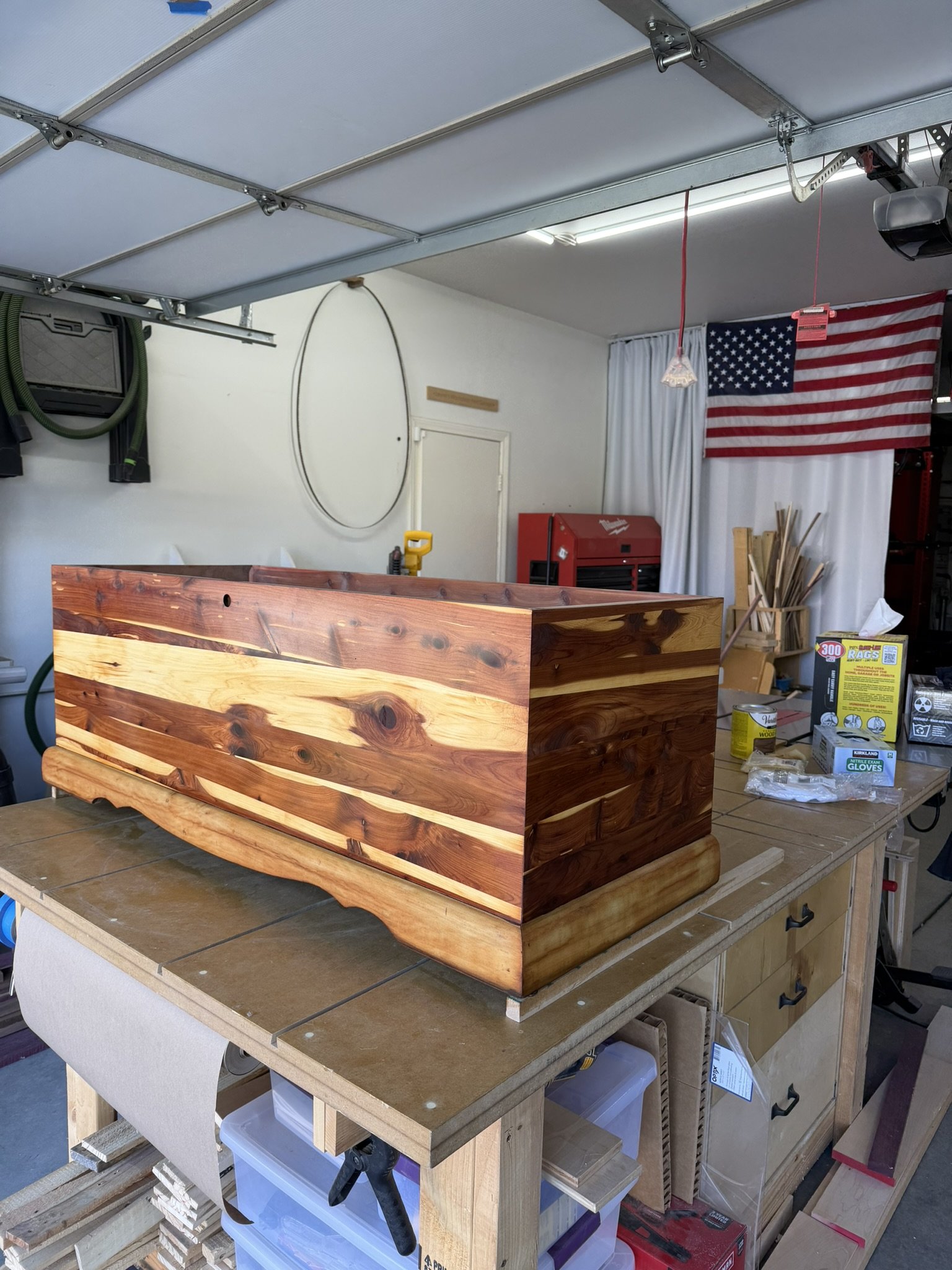
Ready for Stain - Aged cedar loves to drink up conditioner. This crucial step helps manage the wood’s natural absorbency and ensures a beautiful, consistent color once the final finish is applied.
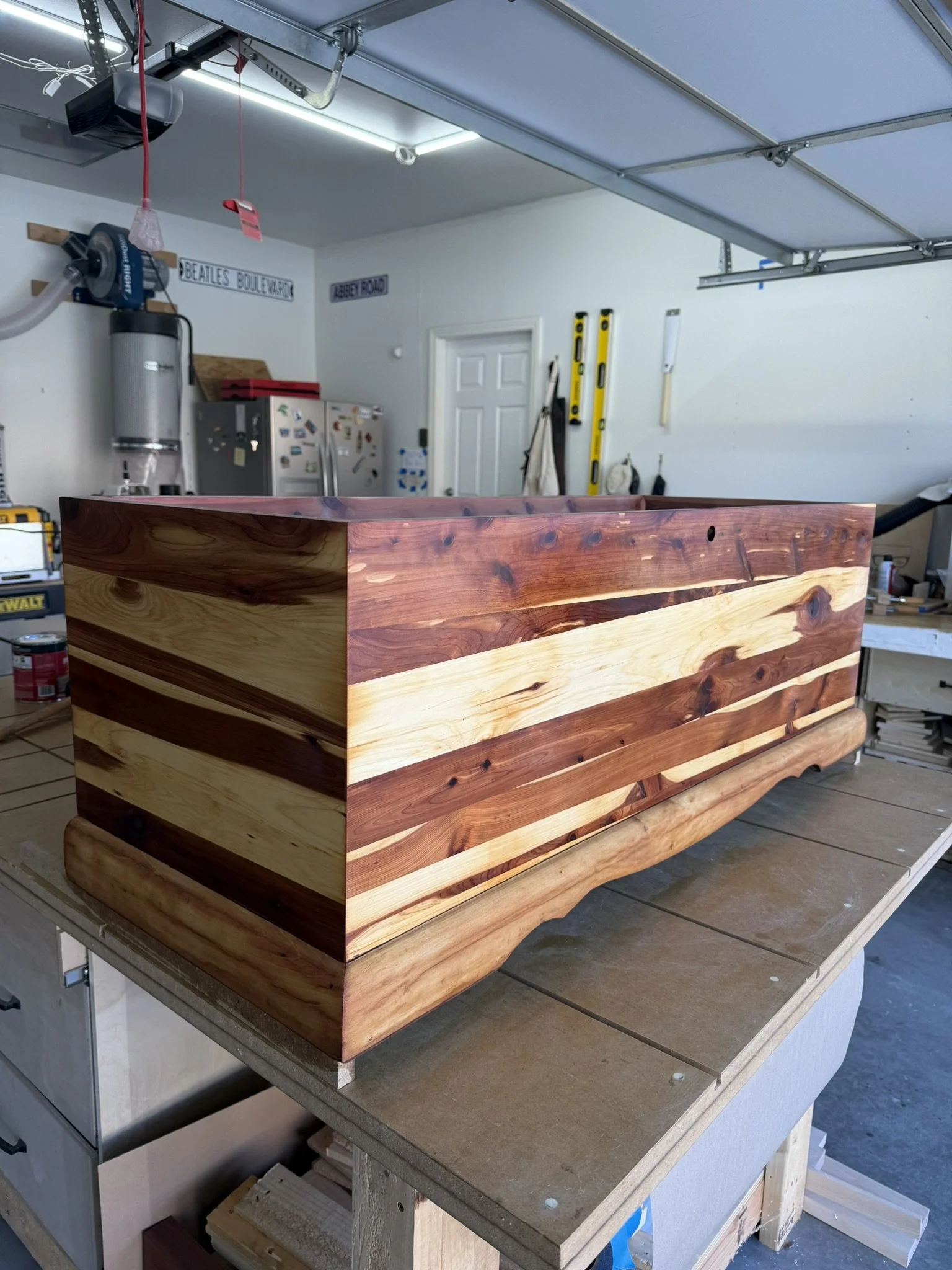
Dry Wood Popping with Conditioner - Conditioning in progress. You can see how the cedar is already taking it in. Prepping soft woods like this ensures the final stain won’t soak unevenly or leave blotchy spots.
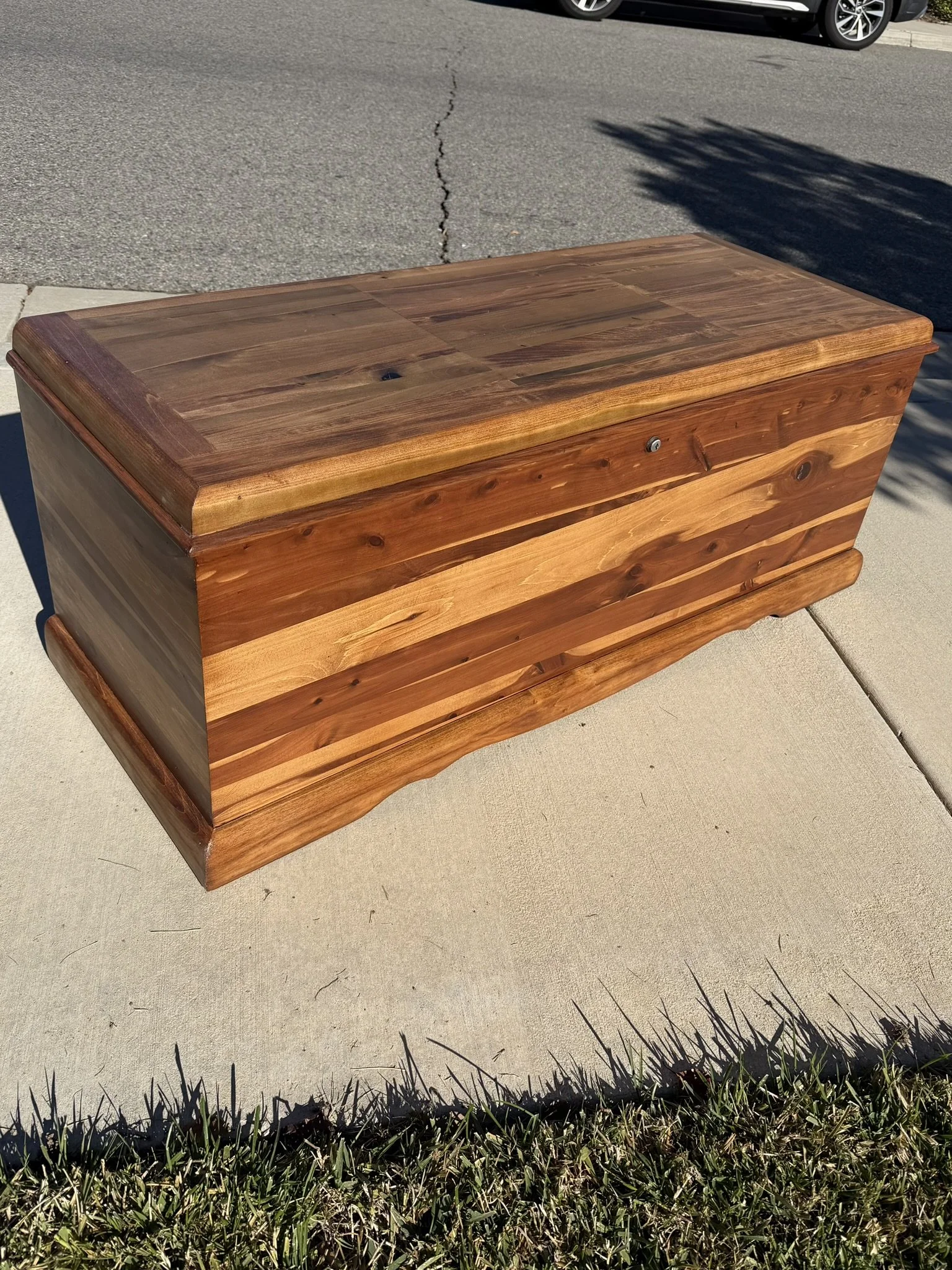
Restored and Revived - This Lane cedar chest was brought back to life with a full exterior refinish using Varathane’s “Special Walnut” stain, deepening the tones while letting the natural grain still shine through. Finished to protect and preserve for years to come.
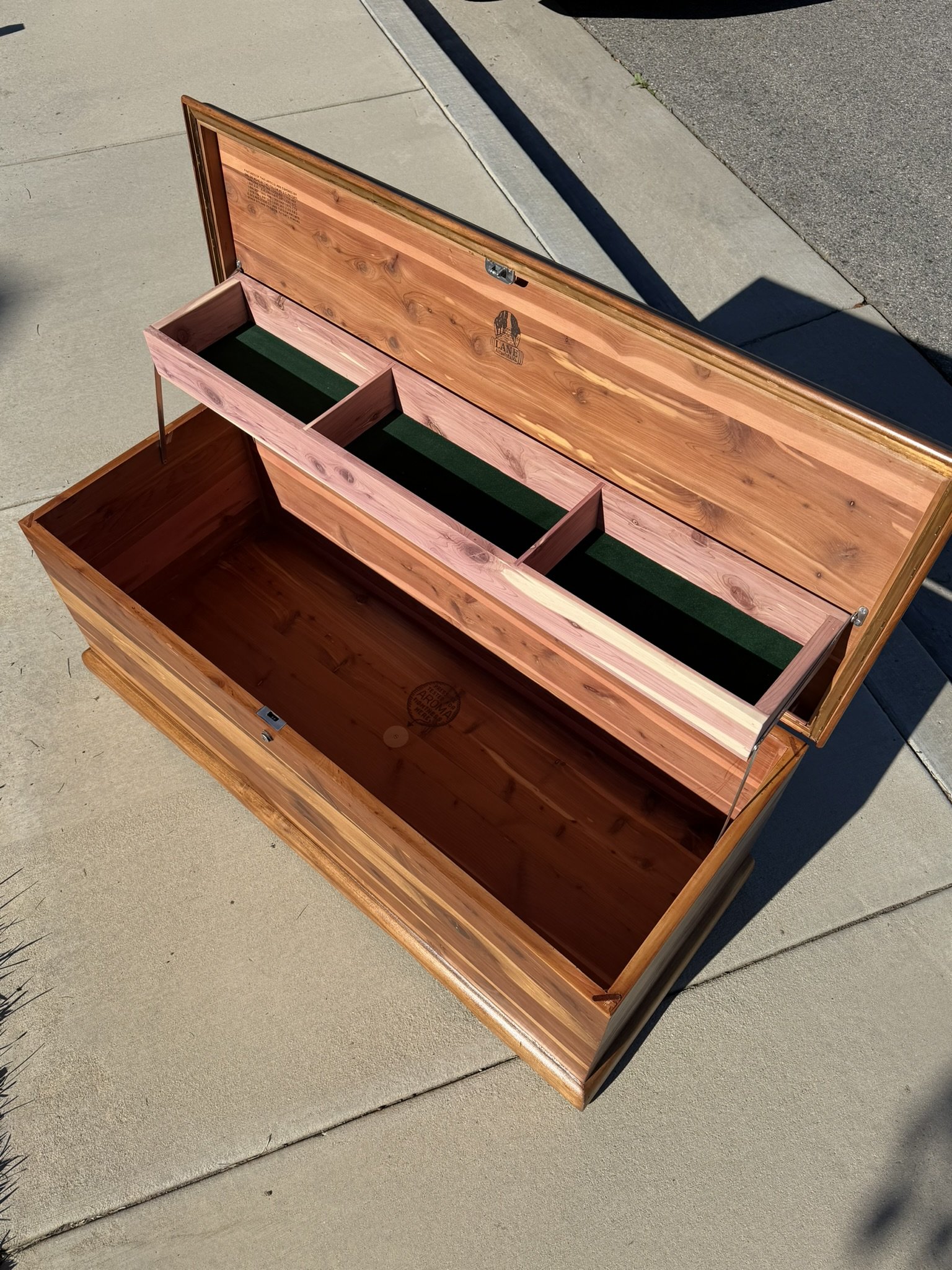
Interior Rebuilt, Vintage Soul Preserved - The inside tray was rebuilt with fresh cedar to match the original layout. Lane's branding and the original cedar paneling were preserved, cleaned, and refreshed. The green felt lining was custom-fit to finish off the interior.
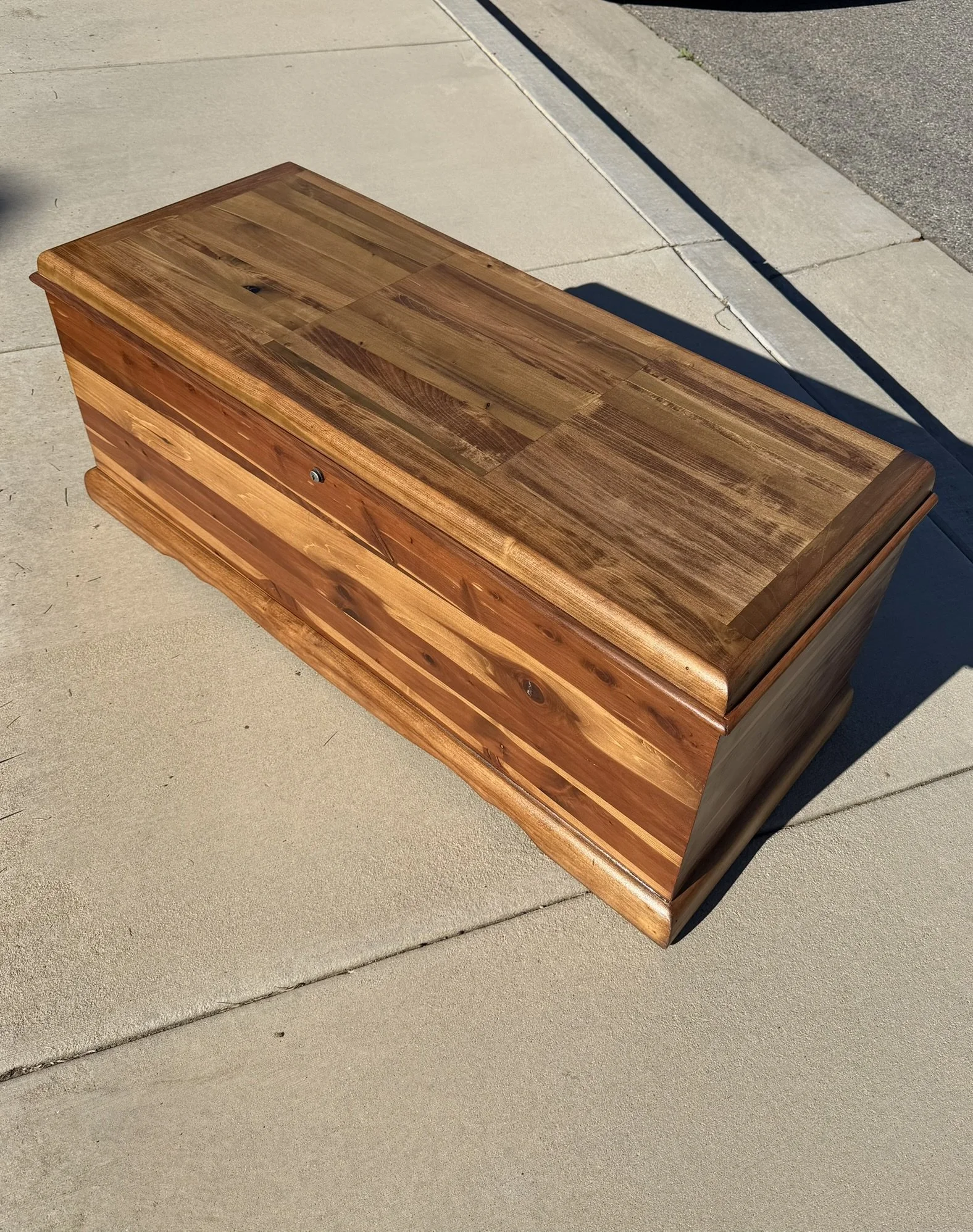
Side Profile View of Finished Chest - The client-chosen “Special Walnut” stain enhances the rich grain and variation of the cedar exterior. A warm, timeless look. No paint, just wood doing what it does best.
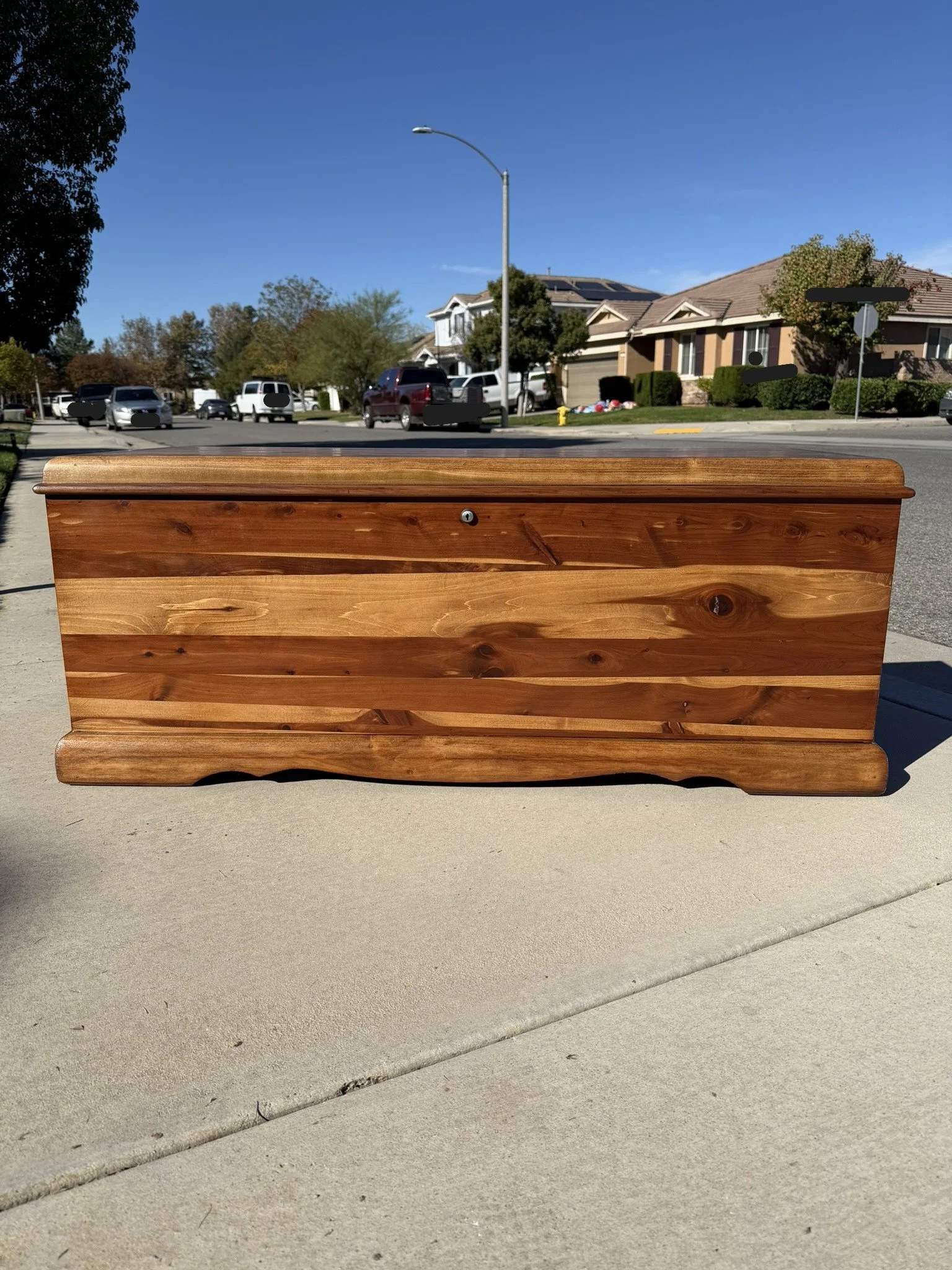
Finished and Functional - The newly refinished base shows off the clean lines and detailed trim. With a fresh coat of stain and protective finish, this chest is ready for the next chapter in its story.
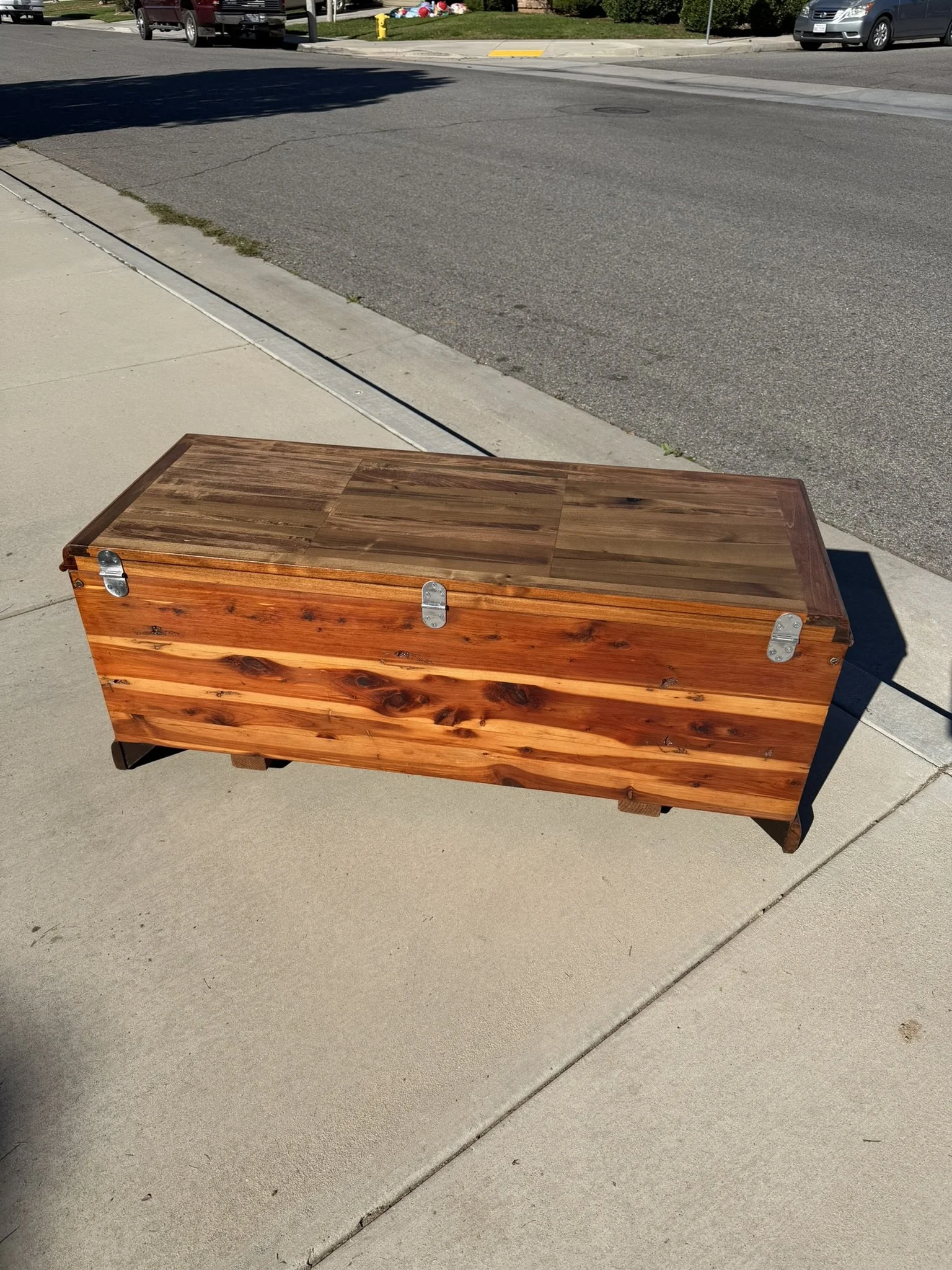
Final Finish and Depth - The Special Walnut stain brings warmth and richness without masking the natural variation in the grain. This final shot shows the back—hardware was cleaned, but no stain was applied. Just a light sanding to refresh and let the original cedar character shine through.